
With the upsurge in artificial intelligence (AI), cloud services and hyperscale infrastructure comes an inadvertent outcome – the unprecedented demand for electricity! Datacenters are no longer just storage and compute hubs anymore; they are becoming major power consumers. The old model of relying principally on solar energy is increasingly inadequate.
To achieve true 24/7 resilience, cost-effectiveness and sustainability, operators must shift to multi-vector renewable power: wind, hydro and battery storage must play equal roles alongside solar.
The Renewable Shift in Data Infrastructure
The global data-center landscape is undergoing a seismic shift. As AI, cloud platforms, and hyperscale architectures accelerate at unforeseen speed, their energy demands are rising just as fast. What was once a predictable, linear growth curve has now become exponential, driven by compute-intensive AI training, high-density GPU clusters, and round-the-clock digital services powering everything from streaming to autonomous systems.
This surge has turned energy into the new competitive frontier. Power availability, once a background utility, is now a strategic determinant of where, how, and whether datacenter capacity can scale. Sustainability, once viewed as a corporate responsibility metric, has evolved into both a moral obligation and an operational necessity. Organizations are under pressure to reduce carbon footprints while simultaneously ensuring uninterrupted uptime for mission-critical workloads.
Yet despite this urgency, one misconception remains deeply rooted: that solar energy alone can future-proof next-generation data centers.
Solar is an essential pillar of clean power; but it cannot meet 24/7 compute needs on its own. Its limitations in predictability, nighttime availability, and seasonal variability expose data centers to significant operational risk. To truly build resilient and carbon-free infrastructure, the industry must move beyond a “solar-only” mindset and embrace a diversified renewable ecosystem.
The future of sustainable compute lies in the harmonized integration of wind, hydro, and battery storage working in tandem with solar to deliver reliable, round-the-clock, clean energy at hyperscale.
II. The Power Paradox: Why Solar Alone Falls Short
Solar energy has been the centrepiece of many green data-centre strategies. However, its intrinsic constraints like daylight dependency, intermittency, weather variation, mean that relying solely on solar leaves critical compute loads vulnerable. Add to that the sheer scale of growth: Gartner forecasts that by 2027, 40% of existing AI-data-centres will be operationally constrained by power availability.
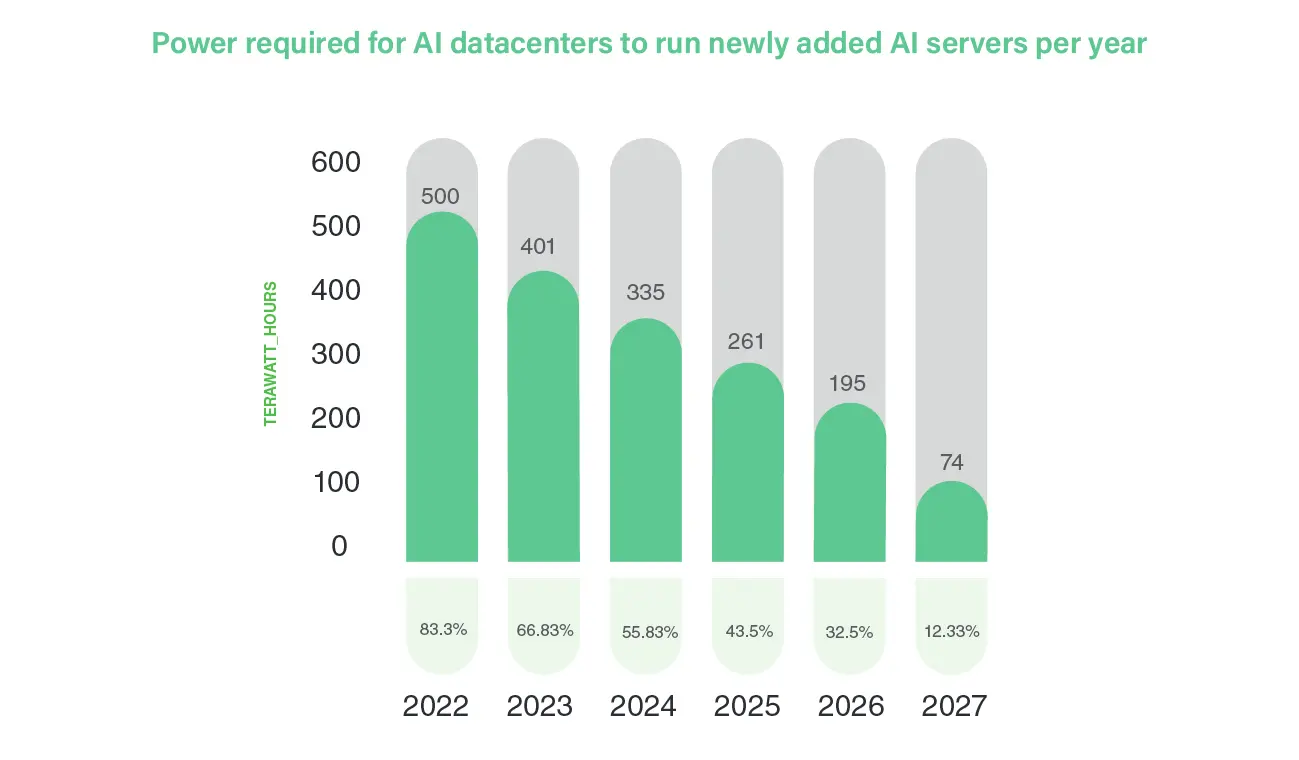
Moreover, McKinsey projects that global demand for data-centre capacity could nearly triple by 2030, with roughly 70 % of that coming from AI workloads.
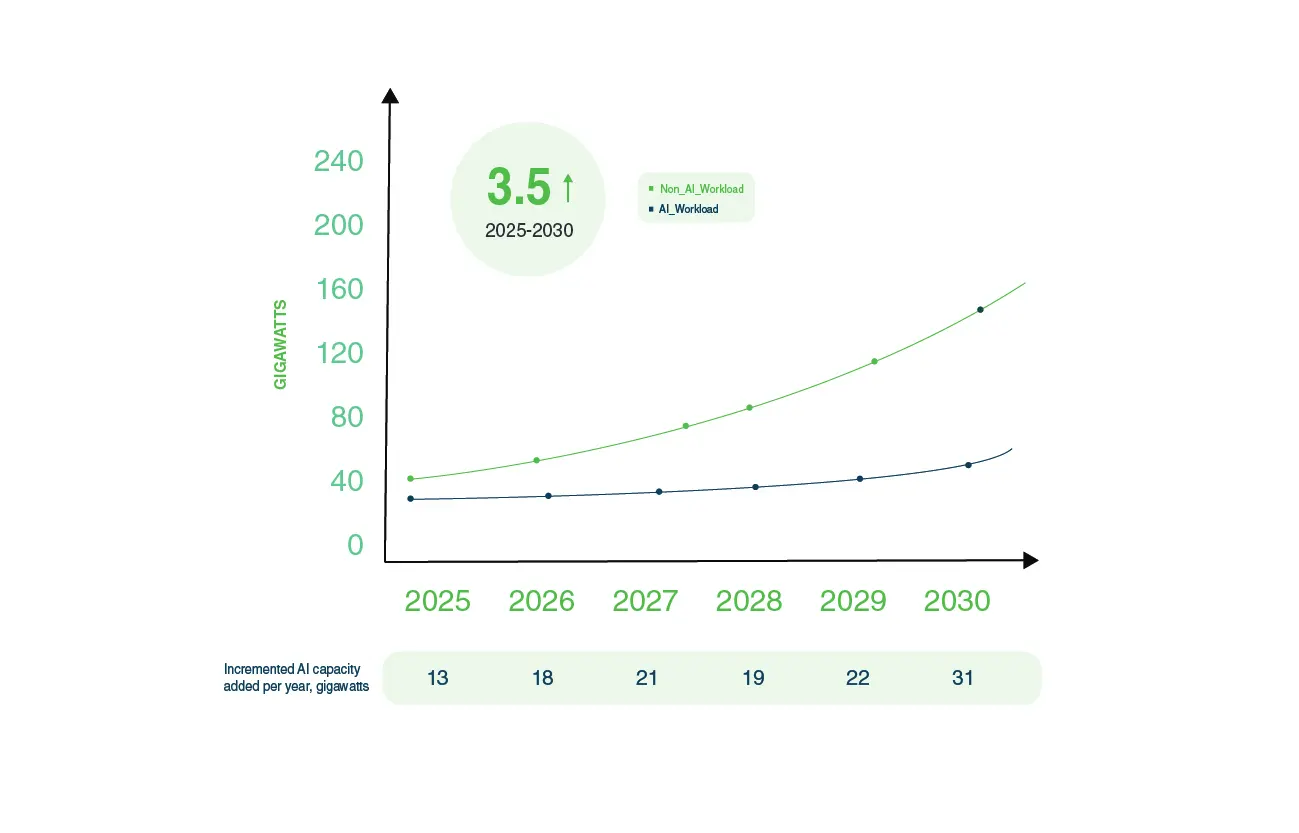
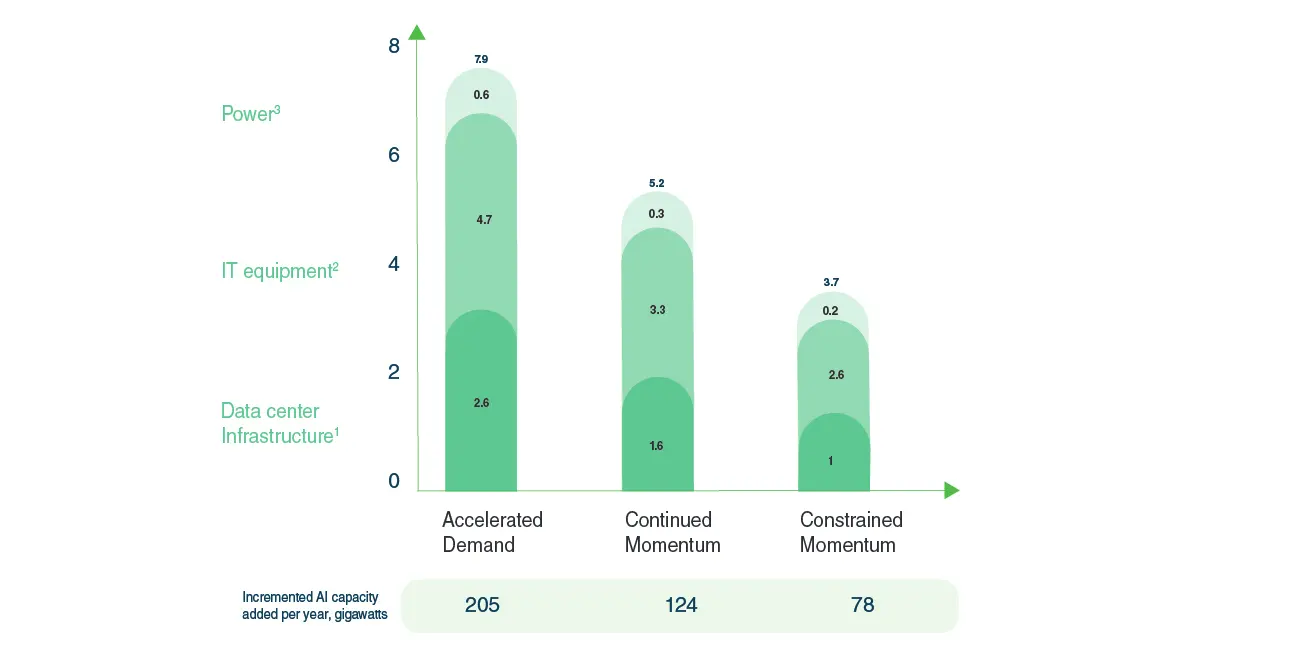
In the U.S., data-centre power demand is expected to add about 460 terawatt-hours of electricity between 2023 and 2030 — roughly three times current levels.
In this context, solar by itself simply cannot guarantee the reliability, continuity and scalability required by modern compute environments.
III. Batteries & Energy Storage: The Missing Link
If solar, wind and hydro provide generation, batteries enable time-shift, smoothing and resilience. Batteries buffer supply and demand mismatches, store excess generation and deliver power when generation dips or loads spike.
Emerging chemistries (e.g., lithium-ion, flow, sodium-ion) are advancing rapidly, reducing cost and improving durability. For the datacentre world, storage unlocks the goal of 24/7 carbon-free energy (CFE) which means every hour of operation is matched with clean power.
According to Forrsester, hybrid microgrids (which integrate renewables, batteries, possibly CHP) are “a sustainable power duo” for data-centres. In short, batteries complete the supply chain: generation + storage = always-on renewables.
However another important point to be considered is the prices of Battery that have fallen to the lowest point recently enabling the viability. This acts as a huge stopgap for the peak tariff zone which is usually ranging from 5pm to 12am in the Indian Subcontinent.
- Batteries usually have a lifetime ranging from 12-18 years depending on the Discharge and varying technical capabilities.
- Much of the world’s lithium supply chain – mining, processing, and refining, is concentrated in a few countries, including China. This concentration introduces supply-chain dependencies that can influence pricing and long-term cost stability.
IV. Wind Energy – The Nighttime Workhorse
Wind energy offers a strong complement to solar. Where solar peaks during midday and drops off after sunset and during cloudy or winter days, wind often generates when solar cannot. This seasonal and diurnal complementarity makes wind an ideal second pillar of renewable supply for data-centres. In regions with high wind potential (coastal zones, plains, offshore sites) it’s increasingly cost-effective.
Wind power can also act as a “night-engine”, enabling operations during hours when solar is minimal. By mixing solar and wind, datacentres gain generation diversity, improving reliability.
High Energy Yield During Non-Daylight Hours:
- Wind resources in many regions (India, EU, US) peak during evening, night, and monsoon.
- Data center load is 24×7 baseload →Wind complements this with significant nocturnal generation.
- Global hyper scalers (Google, Meta, Microsoft) use wind PPAs because wind matches the night-time consumption window.
Additionally, wind PPAs (power-purchase agreements) are becoming more common among hyperscale operators seeking long-term low-carbon supply.
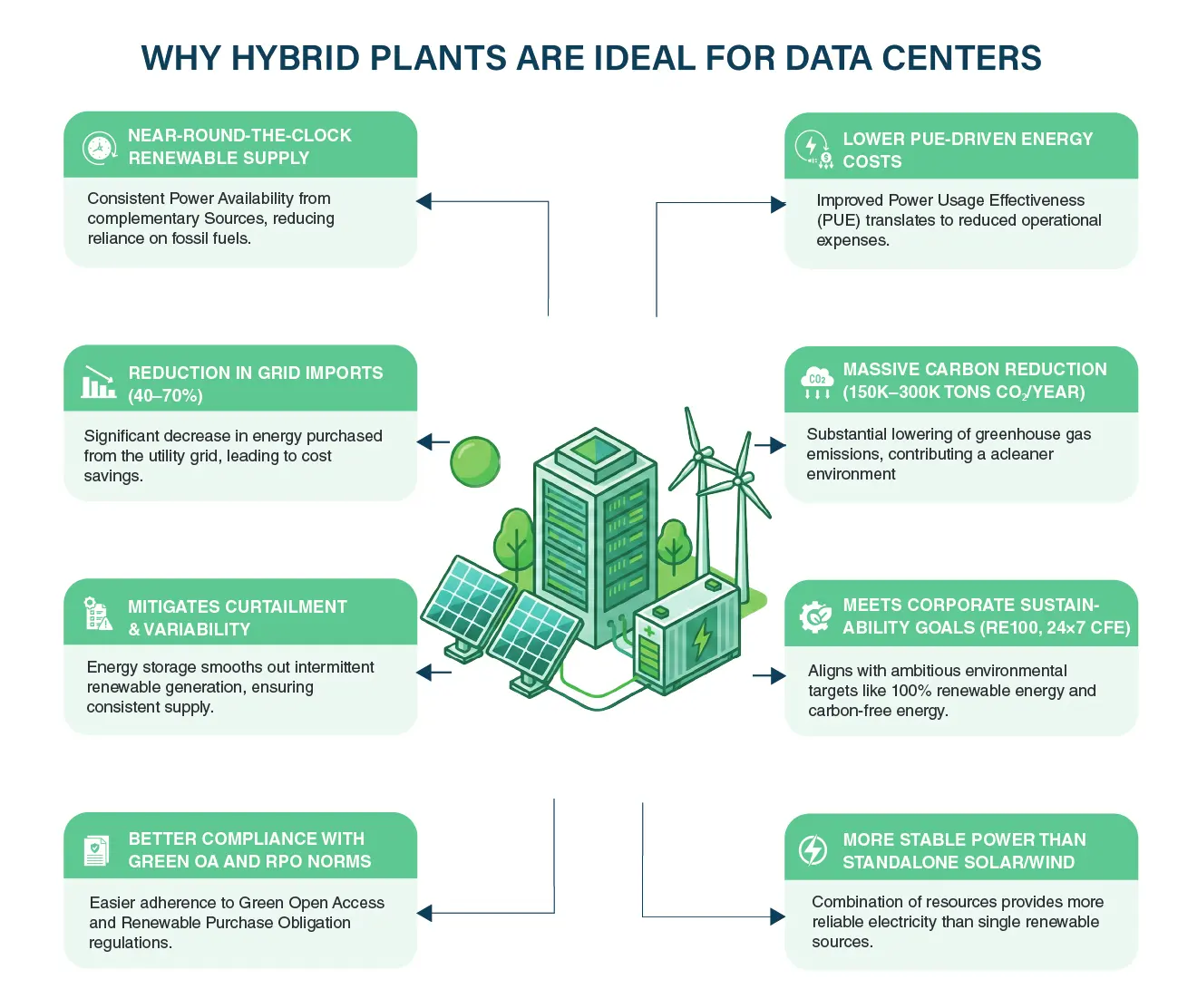
When Wind is blended with solar, Combined Solar + Wind together the hybrid plant offers a higher renewable matching index (RMI) for 24×7 green supply to the Data centers.
A typical blended Solar+Wind mix can achieve: 45–55% combined CUF which is almost like can manage 60–75% annual coverage of a data center’s energy demand.
V. Hydro Power, the Reliable Backbone
Hydroelectric power brings dispatchable, steady-state power which is a major advantage for always-on compute and inference workloads. Unlike intermittent sources, hydro (especially reservoir or pumped-storage types) can deliver sustained baseline output, and even provide load-following capabilities.
In effect, hydro becomes the “firm” baseline to which solar and wind act as variable production. When site geography and water-rights permit, hydro is arguably the most robust renewable anchor for high-availability data hubs. The role of pumped-storage hydro (essentially large scale batteries using water elevation differentials) further enhances flexibility.
VI. Hybrid Integration is the New Imperative
The real game-changer is orchestration: combining solar, wind, hydrobattery and storage into one resilient energy-ecosystem. Through AI-driven energy management systems, operators can dynamically choose which source supplies, when to store, when to shift loads (or even shift workloads geographically) to match low-carbon production windows.
Utility partnerships and grid-planning are increasingly critical. McKinsey notes that new large datacentre loads will challenge grid capacity and transmission build-out timelines, forcing operators to adopt more localised, flexible, renewable-rich architectures.
Forrester also emphasises that microgrids and cogeneration (CHP) are no longer niche: they’re becoming mainstream power-strategy components for data-centres.
The future is one in which datacentres become smart energy consumers and active grid partners: shifting compute to when and where green energy is abundant; storing energy when production outpaces demand; and balancing load and generation regionally. The slogan isn’t “solar only”; it’s “renewables synergy”.
VII. Challenges on the Road Ahead
Mechanical ambition notwithstanding, there are real obstacles. Land and water constraints limit hydro and wind siting; grid interconnection timelines remain long; battery supply-chains (e.g., lithium, cobalt) present sustainability and cost risks.
Major Challenges are Policies and availability of SubStations to Pump in Power both on a central grid and a state grid to Power the Humongous Power requirement of Datacenters and other industries.
Forecasting of Power will also become a challenge in the long term ensuring power availability on a 15 Minute Timeblock basis.
Open Access Cost Uncertainty
Hybrid plants depend on:
- Wheeling charges
- Transmission charges
- Banking restrictions
- Cross-subsidy surcharges
Uncertainty on the above dependencies across states causes some hindrance for faster development of Hybrid plants. Even regulators and utilities struggle to keep pace with the blistering rate of AI-compute growth.
Gartner’s warning of capacity constraints by 2027 is a stark reminder. Operationally, integrating multiple sources and storage demands new control-systems, monitoring, redundancy planning and hardware lifecycle strategies. For datacentre operators, energy strategy can no longer be an afterthought. It must be embedded into site selection, design, financing and operating model from Day One.
Conclusion: The Multi-Energy Future
Solar will remain critical but it cannot stand alone. For datacentres to deliver on the promise of reliable, scalable, low-carbon compute in the era of AI and cloud expansion, operators must embrace a portfolio approach of wind + hydro + battery + solar. This approach provides generation diversity, temporal flexibility, and resilience against power-grid constraints. More than that, it aligns sustainability with business continuity and cost efficiency.
In short: the datacentre of the future will not just be solar-powered. It will be wind-charged, hydro-anchored and battery-backed. That’s how you power the digital world at scale.

Rishik Teepireddy, Vice President - Renewable Energy, CtrlS Datacenters
With over eight years of rich experience, Rishik Teepireddy leads the Renewable Energy Division at CtrlS. As part of his role, Rishik spearheads the company’s transition toward sustainable, low-carbon operations. He drives strategy and execution for large-scale solar projects, renewable energy procurement, and green power integration across CtrlS’s hyperscale datacenters. Under his leadership, CtrlS is advancing towards 100% renewable energy adoption by 2030 and net-zero emissions by 2040.

 marketing@ctrls.in