
Most BFSI institutions that stall on digital transformation carry an infrastructure problem misread as an application problem.
- A core banking migration slips because the underlying network cannot guarantee required latency
- A fraud detection model delivers inconsistent outputs because the compute environment was never purpose-built for high-density AI workloads
- A cloud rollout fails an RBI audit because the architecture cannot prove compliance under live inspection
The industry conversation has centered on application modernization, API layers, and fintech partnerships. Infrastructure has been treated as a prerequisite that will sort itself out. It becomes the ceiling instead.
Infrastructure architecture determines which applications can run, which regulations can be met by design, and how much of the innovation roadmap executes at speed.
This post argues that the infrastructure layer is the transformation decision, and offers a framework to evaluate whether yours can support the ambitions on your roadmap.
Let’s dive right in!
The Architecture Problem That Masquerades as an Application Problem
The pattern repeats across institutions of every size. Boards approve transformation budgets. Programs get launched. Results disappoint. The cause sits one layer below where everyone is looking.
Why BFSI transformation budgets don’t produce transformation outcomes
McKinsey’s 2025 Global Banking Annual Review puts annual technology spend across global banks at roughly $600 billion. Price-to-book ratios in banking sit 67% below other industries. The spend is real. The returns are not. The gap is architectural.
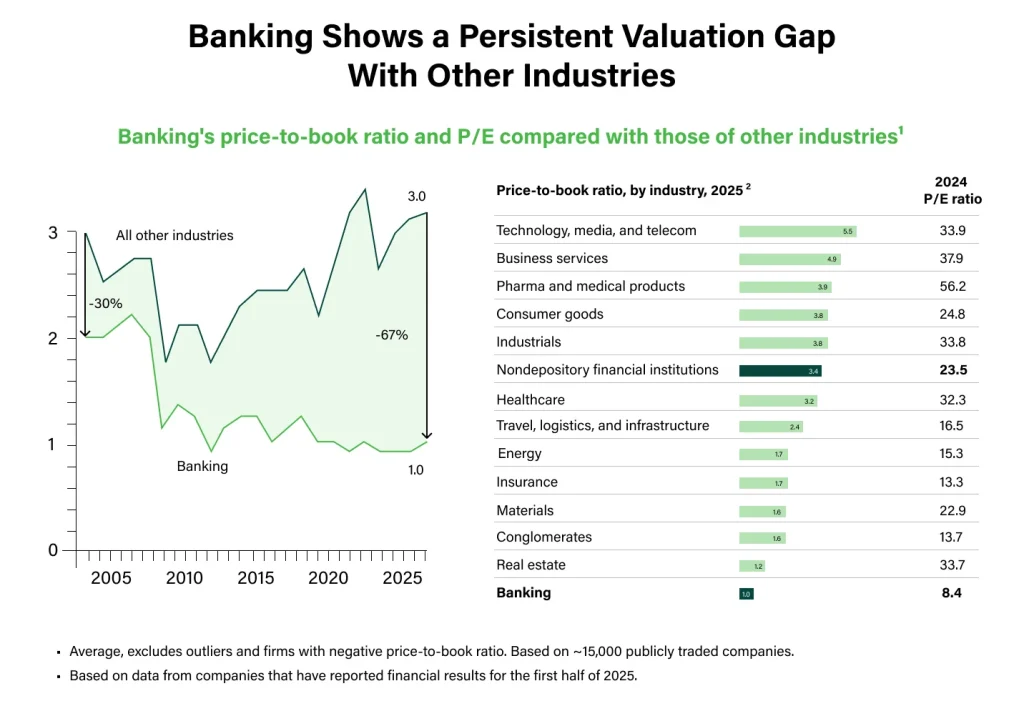
Banks routinely modernize applications on top of infrastructure that was never designed to run them.
Think of it this way, a new payments platform deployed on a legacy network stack still inherits that network’s latency ceiling. If a risk analytics engine moved to cloud through a lift-and-shift migration, it will still carry the same performance constraints it had on-premises, at higher operating cost. The migration gets completed. The outcome doesn’t improve.
Moving workloads to cloud and building for cloud economics are two different decisions. Lift-and-shift satisfies a migration KPI. It does not change the economics or performance profile of the workload.
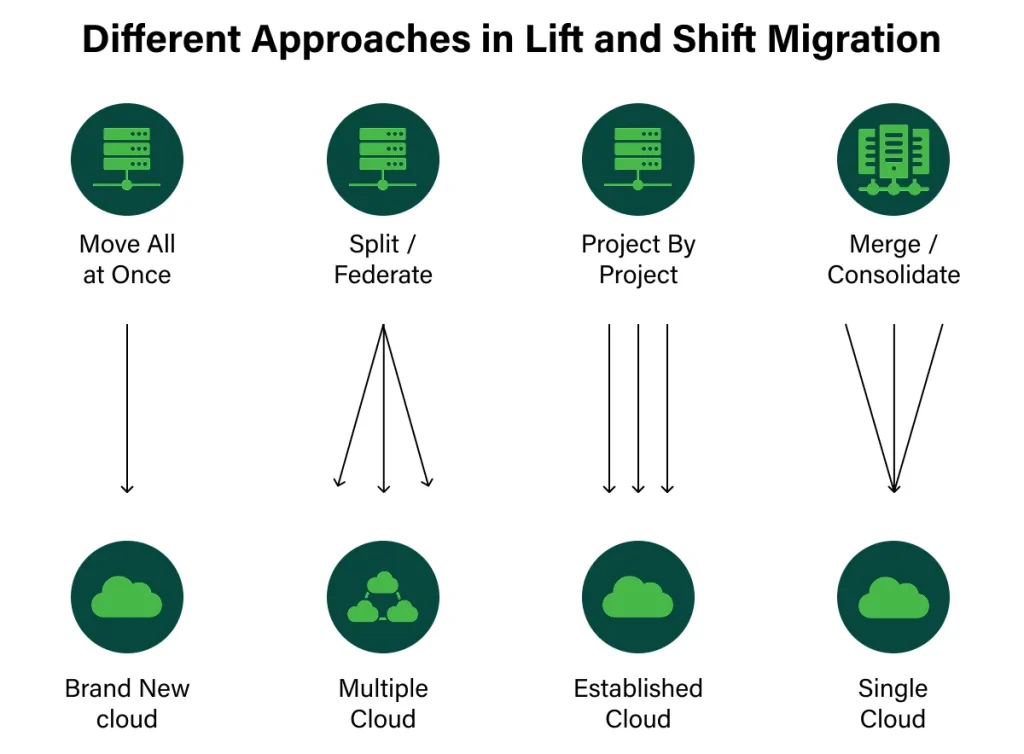
Consider a bank that completes a two-year cloud migration, runs 35% over cost projection, and still has no single team accountable for resolving cross-system alerts. The applications moved without the architecture change. Every integration point that breaks still requires three teams to coordinate a fix.
When infrastructure architecture decisions get made after workload placement rather than before, governance gets retrofitted. And the problem with retrofitted governance is that they fail regulatory inspections.
The architecture layer sets what is achievable. Getting it wrong means rebuilding the most expensive layer twice.
The Three Infrastructure Decisions BFSI Can’t Retrofit
Some architecture decisions carry a correction cost that exceeds the original implementation budget. These three sit at the top of that list.
1. Compliance-by-architecture vs. compliance-by-documentation
Most BFSI cloud audit failures in the last two years followed the same pattern. Contracts were compliant. Policies were documented. Vendors were tier-one. The architecture still couldn’t prove any of it under live inspection conditions.
RBI’s updated cybersecurity framework marks a shift from perimeter-based security toward identity-first, resilience-focused network architecture. Zero Trust, micro-segmentation, and continuous monitoring are now architecture requirements.
Institutions treating them as security tool purchases rather than design decisions will keep failing audits. RBI imposed penalties totaling ₹54.78 crore in FY 2024-25 for non-compliance. Non-compliant flat networks remain the most common vector.
Data localization adds a physical dimension to this problem. RBI mandates that payment data be stored within India. That is a physical infrastructure decision. It cannot be resolved through a cloud configuration setting or a vendor contract clause.
The operative question is not whether your institution is compliant. It is whether your architecture produces audit evidence as a natural by-product of operations, or whether compliance requires a separate overhead every time a regulator asks.
2. Workload placement: the hybrid cloud decision that can’t be undone
Hybrid cloud works in BFSI when workload placement is treated as a compliance decision before migration begins.
Core workloads, including core banking systems, payment processing engines, and customer financial data, require private cloud or dedicated infrastructure hosted within India.
Non-core workloads such as analytics platforms, dev/test environments, and digital channels can run on a public cloud with appropriate controls in place. These boundaries are regulatory.
Two hybrid deployment models dominate:
- Dedicated hardware integration using Azure Stack or AWS Outposts
- Application modernization using Kubernetes and Docker
The choice between them depends on workload classification, not vendor preference. Institutions that migrate core banking systems because an earlier migration of collaboration tools went smoothly tend to generate the most expensive rework in BFSI cloud programs.
Leading Indian public sector banks that host critical workloads on Rated-4 banking facilities treat infrastructure selection as a sovereign and compliance decision. Uptime is a baseline expectation, not the deciding criterion.
3. Infrastructure for AI workloads is not infrastructure for general compute
Fraud analytics, predictive credit scoring, and real-time AML screening share specific infrastructure requirements: consistent power delivery, stable thermal environments, and low-latency interconnects.
General-purpose cloud or legacy data center infrastructure was not engineered to meet those specifications reliably.
When agentic AI workloads run on infrastructure built for transactional compute, model performance becomes inconsistent, inference latency increases, and costs become unpredictable.
AI token costs dropped 280x over two years according to Deloitte Tech Trends 2026. Enterprises still face large monthly AI infrastructure bills because the economics were never assessed at the architecture stage.
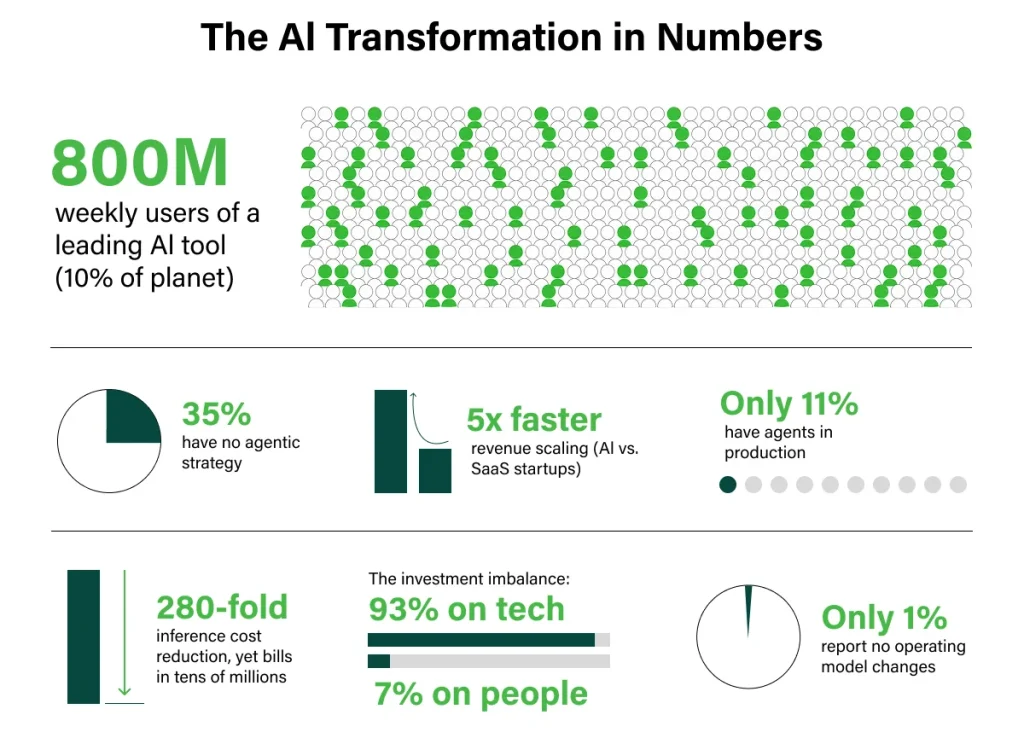
Workload-to-infrastructure mapping must happen before deployment. It cannot be corrected cheaply after a model is in production and producing inconsistent outputs at scale.
What “BFSI-Grade Infrastructure Architecture” Actually Means in Practice
Built for What BFSI Infrastructure Actually Demands
CtrlS is built around the same decision points this post has examined. Each capability maps to a specific architectural requirement:
1. Compliance-by-architecture
CtrlS operates as Asia’s largest Rated-4 datacenter footprint, with compliance-ready hosting designed for regulated industries. 17 of India’s top 20 public sector banks and 5 of the top 10 MNC banks in India run critical workloads here. That concentration reflects a deliberate infrastructure selection decision, made by institutions with direct regulatory accountability.
2. Hybrid workload placement
The portfolio spans enterprise colocation, hyperscale build-to-suit campuses, private cloud, and managed IaaS across Mumbai, Chennai, Hyderabad, Bengaluru, Noida, Kolkata, and edge locations. Institutions can place each workload class in the right environment without stitching together multiple vendors or inheriting architecture fragmentation across providers.
3. AI workload readiness
Facilities are purpose-built for high-density GPU, AI, and HPC workloads with air-cooled, direct-to-chip liquid cooling, and liquid immersion cooling. Design PUE of 1.35. GPU Private Cloud and AI-as-a-Service are in production. Institutions running fraud detection or real-time AML screening get the compute environment those workloads actually require.
4. Connectivity
CtrlS hosts major telecom operators, internet exchanges, and direct cloud on-ramps. Google Verified Peering Provider. Direct connectivity to OCI FastConnect. The full BFSI connectivity ecosystem sits within one governed location, which eliminates the fragmented resilience problem created by distributed, uncoordinated arrangements.
5. Resilience and ESG
Uptime SLA of 99.995% backed by military-grade 9-zone security. Disaster Recovery and Business Continuity Services are managed offerings, not integration projects. On ESG, CtrlS operates India’s first captive solar farm for data centers, targets 100% renewable energy by 2030, and holds zero-waste certification, giving institutions verifiable credentials for ESG disclosure, not efficiency claims.
The Infrastructure Decision That Defines the Next Decade
The BFSI institutions that lead India’s digital financial services landscape over the next decade will be defined by one decision made now: whether they treat infrastructure architecture as a strategic layer or an operational detail.
If your roadmap includes core banking modernization, AI deployment at scale, hybrid cloud migration, or regulatory audit readiness, the infrastructure layer is where execution either accelerates or stalls.
Talk to CtrlS’s BFSI infrastructure team to assess whether your current architecture can support your next phase of transformation.
FAQs
Q. What is the difference between BFSI-grade infrastructure and standard enterprise data center infrastructure?
BFSI-grade infrastructure is built to meet regulatory audit readiness, data localization requirements, and zero-downtime SLAs by design, not by configuration. Standard enterprise infrastructure typically retrofits compliance through policy layers rather than architectural decisions.
Q. Why can’t BFSI institutions simply run AI workloads on existing cloud infrastructure?
General-purpose cloud infrastructure isn’t designed for the power density, low latency, and thermal stability that BFSI AI workloads demand. Fraud detection models and real-time scoring engines require purpose-built compute to deliver consistent performance and predictable costs.
Q. What does RBI’s updated cybersecurity framework mean for infrastructure architecture?
RBI now expects identity-first, micro-segmented network architecture rather than perimeter-based security. This means Zero Trust and continuous monitoring must be built into the infrastructure design, not added as an overlay after deployment.
Q. How should BFSI institutions decide which workloads go to private cloud vs public cloud?
Treat workload placement as a compliance decision before a cost decision. Core banking systems, payment processing, and customer financial data belong in private or dedicated infrastructure within India. Non-core workloads like analytics and dev/test environments can leverage public cloud with appropriate controls.
Q. What is a Rated-4 data center and why does it matter for BFSI?
A Rated-4 (or Tier IV equivalent) facility provides fault-tolerant design with full redundancy across power, cooling, and networking. For BFSI institutions, this means no single point of failure, continuous uptime under maintenance, and infrastructure resilience that matches regulatory expectations.

Manzar Saiyed, Vice President - Service Delivery, CtrlS Datacenters
With over 15 years of rich experience in project and program management, Manzar has been instrumental in planning and executing mid to large size complex initiatives across different technologies and geographies. At CtrlS, he is responsible for solutioning and bidding for large system integration projects across emerging markets.

 marketing@ctrls.in