
A few years ago, buffering was normal.
Waiting a few seconds for a video, payment, or file sync wasn’t a concern.
Today, even milliseconds matter.
From real-time gaming and smart factories to AI-driven applications and autonomous systems, the digital world now demands instant responsiveness.
At the heart of this shift lies the convergence of 5G and edge computing enabled by a new generation of distributed datacenters.
A Digital Nation Operating in Real Time
India exemplifies this transformation.
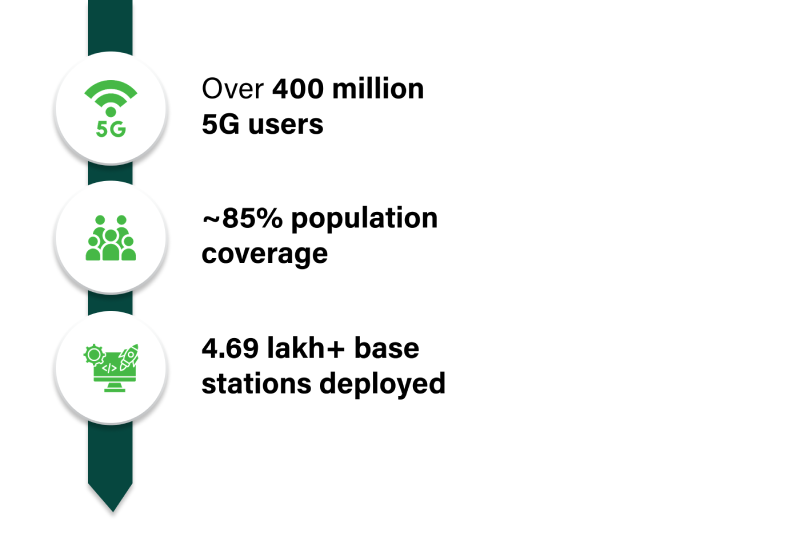
At the same time, India’s digital economy is generating massive real-time data.
Take UPI:
A simple QR scan at a tea stall or metro station triggers a transaction completed in seconds. Today, UPI accounts for over 80% of retail digital payments, processing billions of transactions annually.
Every such interaction depends on low-latency, high-performance infrastructure.
Why Speed Alone Isn’t Enough
5G is often associated with speed but latency is the real game changer.
Latency = time taken for data to travel between device and server.
For:
- Autonomous vehicles
- Smart factories
- AR/VR
- Real-time healthcare
Even milliseconds matter.
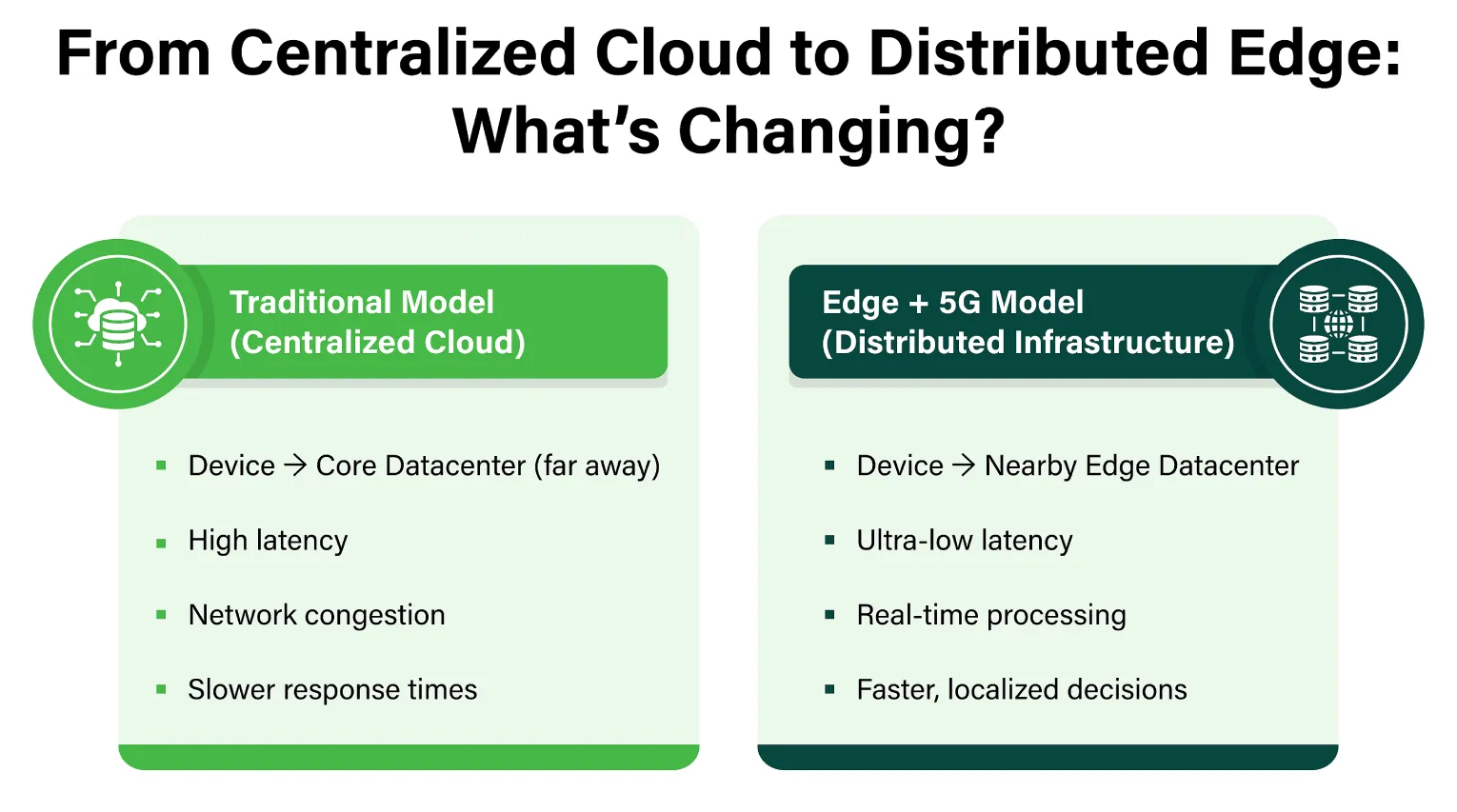
Traditional centralized datacenters, often located far away, introduce delays that modern applications can no longer tolerate.
Bringing Compute Closer
Edge computing fundamentally changes this model.
Instead of sending data to distant locations, processing happens closer to users via localized datacenters.
Impact:
- Ultra-low latency
- Faster response times
- Reduced congestion
- Enhanced application performance
The Rise of Edge Datacenters
India’s edge datacenter market is projected to grow from ~$428M to $3B+ by 2033.
Key demand drivers:
- Telecom & IT (5G networks)
- BFSI (real-time payments, fraud detection)
- Retail & e-commerce (customer analytics)
- Healthcare (connected devices)
The ecosystem is evolving into a distributed architecture combining hyperscale + edge.
Engineering Challenges Behind the Edge
Building edge infrastructure is complex:
- High power density for AI workloads
- Compact, efficient cooling systems
- Ultra-low latency network interconnects
- High availability and resilience
Unlike hyperscale DCs, edge facilities must deliver the same reliability in constrained urban environments.
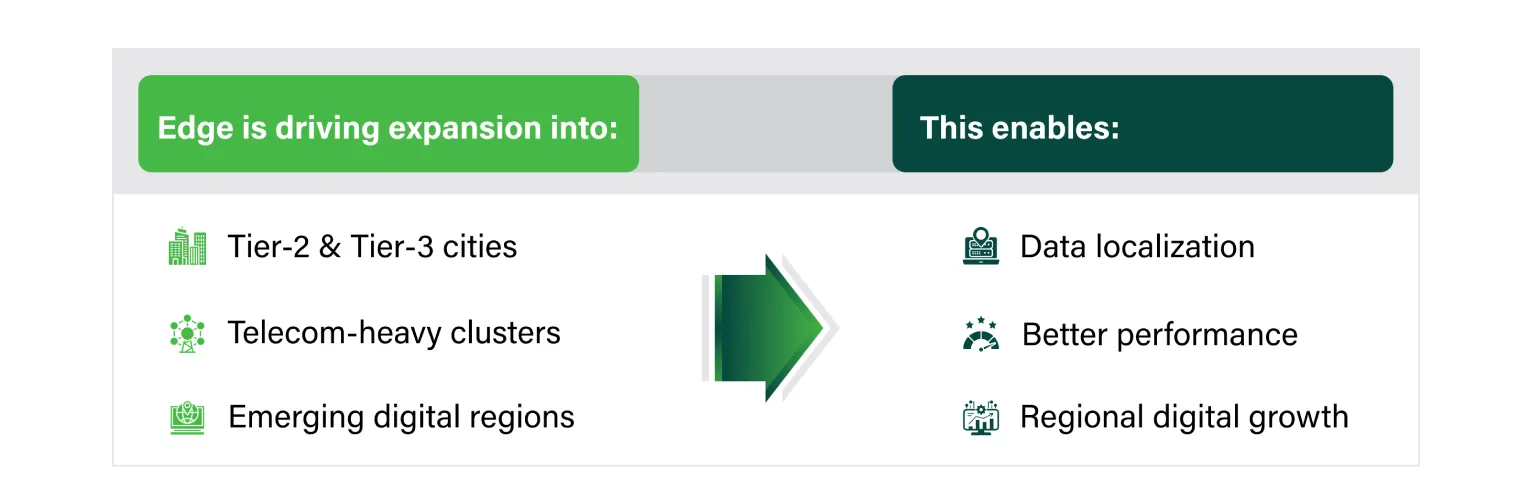
A New Geography of Digital Infrastructure
Datacenters are no longer limited to major metros.
Industry Impact
The 5G + Edge combination is transforming:
- Manufacturing → Smart factories
- Healthcare → Connected care
- Retail → AI-driven personalization
- Media & gaming → Low-latency streaming
- BFSI → Instant payments
The Backbone of the Real-Time Economy
Datacenters are no longer passive infrastructure.
They are the backbone of a real-time digital economy, enabling:
- AI workloads
- 5G networks
- IoT ecosystems
- Everyday digital experience
The Road Ahead
As billions of devices come online, the need for distributed, low-latency infrastructure will only accelerate.
Behind every seamless interaction lies a fabric of interconnected datacenters from hyperscale to edge.
At CtrlS Datacenters Ltd, this vision is already in motion with an expanding network of edge datacenters across India, bringing mission-critical infrastructure closer to businesses and users.

Vipul Kumar, Senior Vice President – Edge & Network Business, CtrlS Datacenters
Vipul is a seasoned telecom and datacenter leader with over two decades of rich experience spanning submarine cable systems, edge datacenters, and network infrastructure ecosystems. He is passionate about building sustainable, compliant, and scalable digital infrastructure that empowers regional enterprises, SMEs, and hyperscale players alike. As Senior Vice President – Edge & Network Business at CtrlS, he leads initiatives that bridge connectivity and compute — from fiber and network deployments to strategic partnerships and business development, building the network foundation and ecosystem partnerships that power CtrlS’s pan-India edge datacenter expansion.

 marketing@ctrls.in