
The average enterprise recovery time for a malware attack is 24 days and the average cost to a business of an attack is around $4.5 million. In India, let’s say, a private bank finds ransomware at 11 AM, the last clean backup is from midnight, and the regulator is asking for the last drill log. A peer on DRaaS was back online within fifteen minutes.
Most Indian enterprise IT teams inherited a backup posture designed for hardware failure, not for ransomware, regulatory drills, or zero-downtime customer expectations. Calling it disaster recovery is generous.
This post breaks down what each approach actually does, where they fail, and how to decide based on workload tier, regulatory exposure, and recovery objectives, with the Indian context built in. You leave knowing what RBI, IRDAI, SEBI, and the DPDP Act actually require.
The Real Difference Between Traditional Backup and DRaaS
Backup is a copy. DRaaS is a running secondary environment. Everything else flows from that distinction.
What traditional backup actually does, and where it stops
Backup creates periodic copies of data, full, incremental, or differential, written to disk, tape, or cloud, and held under a retention policy. The 3-2-1 rule (three copies, two media, one offsite) is the discipline most enterprises still follow.
Its strengths are long retention, compliance archives, granular file restore, and low cost per terabyte. It cannot rebuild the application stack, reconstruct network and identity, or fail traffic over. A single daily backup means a maximum RPO of 24 hours, with an RTO in hours to days, depending on data volume and bandwidth. Backup answers “do we still have the data”. It does not answer “is the business running”.
What DRaaS actually delivers
DRaaS replicates the live production environment, including OS, applications, configurations, and data, to a managed secondary site, with near-continuous replication, journal-based recovery, and RPOs measured in seconds. Runbooks, automated failover, DNS handling, and orchestrated failback ship with the service.
Weak DRaaS is a cloud target with a marketing deck as there are no tested runbooks, no SLA-backed RTO, no India-resident pairing. Strong DRaaS has SLA-backed RTO and RPO with penalties, an isolated recovery sandbox, immutable storage, quarterly tests with documented evidence, and an in-India primary-secondary pair. Ask for the last sanitised failover test report. If none exists, it’s best to walk away.
Why this is not a “tape vs cloud” debate
Do not collapse this into a storage medium argument. The real difference is what gets recovered, how fast, and whether the recovery has been rehearsed. A cloud-stored backup is still a backup.
6 Dimensions Where DRaaS and Backup Actually Diverge
These six dimensions show clearly where the two approaches diverge, and where the gap matters most for enterprise decisions.
| Dimension | Traditional Backup | DRaaS |
|---|---|---|
|
RTO |
Hours to days |
Minutes |
|
RPO |
Hours (last scheduled job) |
Seconds (continuous replication) |
|
Scope of recovery |
Data only |
Data + applications + OS + network |
|
Cost model |
CapEx-heavy, predictable storage cost |
OpEx subscription, pay for replication and reserved compute |
|
Ransomware posture |
Vulnerable if backups are reachable from prod |
Immutable copies, isolated recovery, point-in-time rollback |
|
Testing |
Rarely tested end to end |
SLA-backed test cycles, drill evidence for auditors |
RTO and RPO: The gap between hours and minutes becomes quite critical for a payment platform or a core banking system (any many other different industries too), every hour offline combines direct revenue loss with regulatory scrutiny.
Scope: Recovering data without recovering the application leaves the business offline. Having the files is not the same as having the service.
Cost model: Backup’s CapEx appears cheaper on paper. DRaaS converts secondary hardware, site leases, and refresh cycles into a predictable monthly line.
Ransomware posture: Without immutability and isolation, a compromised admin account can delete both production and its backup simultaneously. That is not a recovery posture.
Testing: A backup that has never been fully restored is a belief, but enterprises cannot operate on belief only. DRaaS test cycles produce dated, auditable evidence that regulators and cyber insurers actually accept.
Recovery objectives are business decisions
Map every workload to a recovery objective before choosing a tool. For a payments platform, an hour of downtime can run into crores. For a static document archive, a 24-hour RTO is acceptable. If the CFO cannot answer “what does an hour of downtime cost on Workload X”, the disaster recovery conversation is premature.
Cost looks different across a 5-year horizon
Backup looks cheaper on day one. Add hardware refresh cycles, secondary site costs, manual restore labour, and the bill from a single major outage, and the picture inverts. DRaaS absorbs the infrastructure burden and replaces CapEx with a predictable subscription. The honest cost question is total cost of recovery, not total cost of storage.
Ransomware has rewritten the rules
Modern ransomware targets backups first. Air-gapped, immutable, isolated recovery copies are now baseline. Backups stored on the same domain as production are functionally not backups. Ask whether your backup admin credentials, if compromised, can delete or encrypt your last clean copy. If yes, you have a backup, but it cannot be treated as a recovery plan.
What Makes the Indian Enterprise Decision Different
When we talk about DRaaS with the context of Indian enterprises, it adds three layers that change the architecture conversation entirely: regulatory obligation, data sovereignty, and physical geography inside India.
1. RBI, IRDAI, and SEBI now expect tested failover, not stored copies
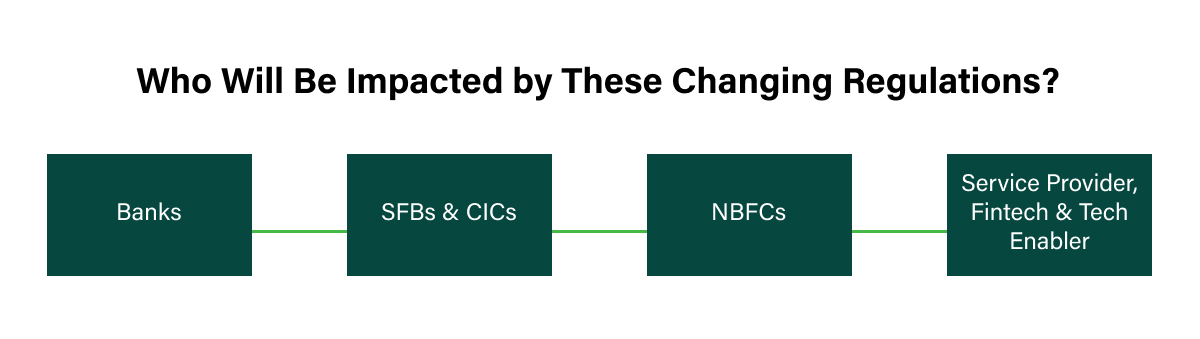
RBI’s Master Direction on IT Governance, Risk, Controls and Assurance Practices (ITG-RC&AP), issued November 2023 and effective April 2024, applies to scheduled commercial banks, small finance banks, payments banks, NBFCs across the top, upper, and middle layers, and all India financial institutions.
The direction is very clear. All the regulated entities must define RTO and RPO for all critical information systems, conduct DR drills on a half-yearly basis, and resolve any issues discovered during drills before re-testing.
For critical systems, RBI expects near-zero RPO, with the DR architecture and procedures demonstrably meeting defined recovery objectives in any contingency.
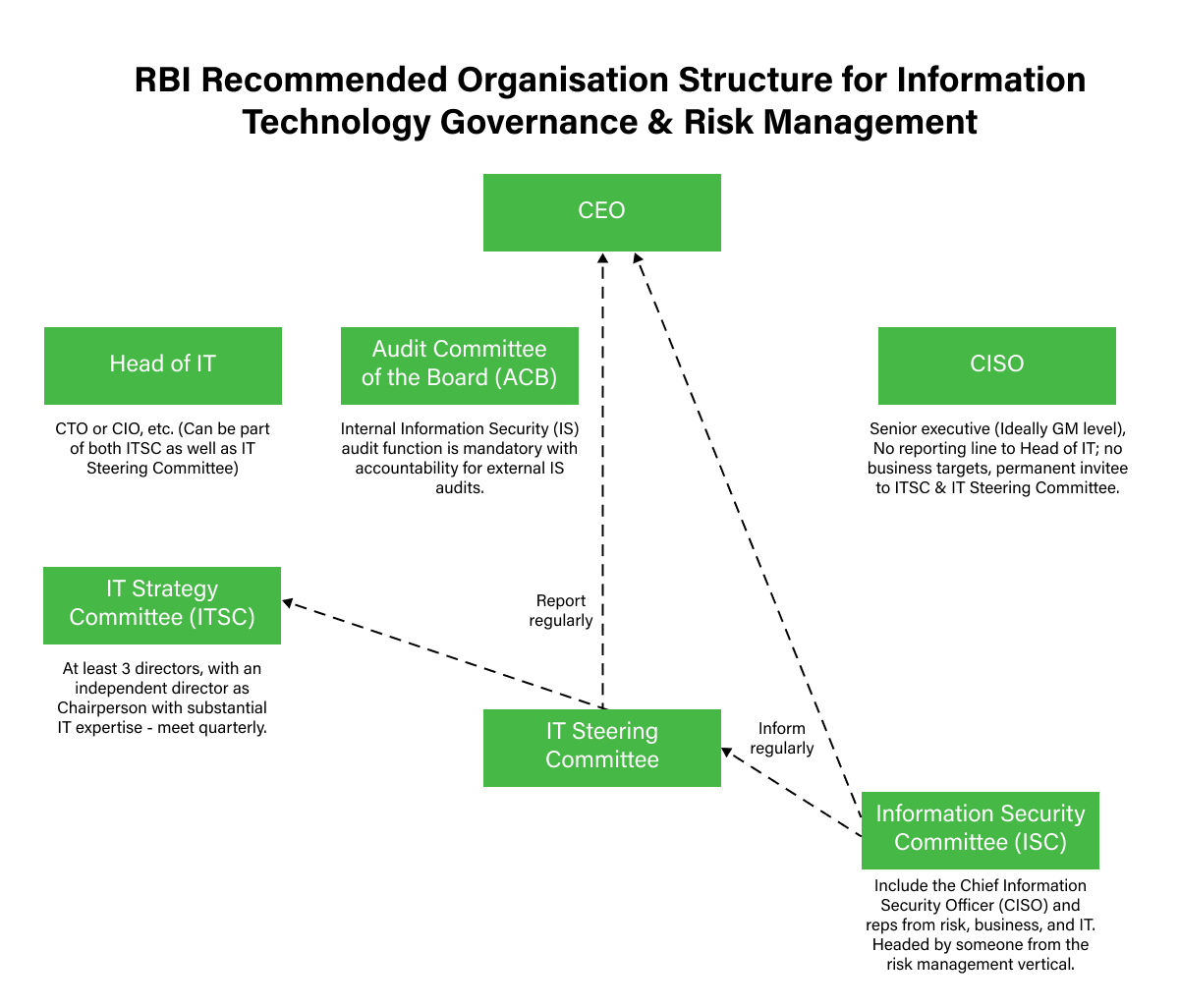
The Board’s IT Strategy Committee must review DR management annually, meeting quarterly. Board-level oversight is a named governance obligation with a documented accountability chain, not advisory language.
SEBI’s Cybersecurity and Cyber Resilience Framework (CSCRF), issued August 2024, sets hard numbers for securities-sector entities. A 2-hour RTO and a 15-minute RPO for critical operations, applied through five graded entity categories based on operational scale.
IRDAI’s 2023 Information and Cyber Security Guidelines follow a comparable governance structure for insurers and intermediaries, requiring documented roles, periodic risk assessments, and crisis planning with external audit evidence.
A regulator does not accept “we have backups” as a DR posture during inspection. They want timestamps, failover logs, named accountable owners, and evidence of issues found and resolved. A daily backup schedule does not produce any of that.
DPDP Act 2023 and data localisation tighten where DR pairs can sit
India’s Digital Personal Data Protection Act 2023 preserves competitiveness but allows the government to restrict cross-border data flows through blacklisting, and any sudden restriction could force immediate data repatriation within tight compliance windows.
RBI goes further for financial data. If a data has anything to do with customer, finance, and transaction records, it must be stored on servers located in India, and DPDP Section 5(9) reinforces this by prohibiting transfer of personal data outside India without explicit consent, with backup and disaster recovery data explicitly included.
A DRaaS provider whose secondary site sits in Singapore or Frankfurt is not a compliant default for most regulated Indian workloads. The question of data residency must be answered in writing, not assumed from a generic SLA. Ask your provider where every replica, snapshot, and recovery sandbox physically resides. A vague answer is the wrong answer.
Geography inside India matters too
Within India, DR pairing across meaningfully different geographic zones is important for both compliance and actual resilience. A Mumbai primary paired with a Hyderabad or Chennai secondary reduces replication latency, keeps data fully sovereign, and introduces genuine seismic and power-grid separation.
This is where in-country datacenter footprint becomes an architectural differentiator. CtrlS, for example, operates 19 datacenters across 9 Indian cities, offering enterprises the DR geography they actually need without routing data offshore. Single-site cloud DR is not regional resilience. It is a more expensive version of single-site primary.
How to Decide What Your Enterprise Actually Needs
The choice between DRaaS and backup is a workload classification exercise, driven by what each system costs the business per hour of downtime.
Tier your workloads first, choose tools second
Most Indian enterprises do not need an all-DRaaS or all-backup answer. They need a tiered posture matched to business consequence.
- Tier 0, mission-critical: payments, core banking, trading systems, ERP transaction layer. RTO under 15 minutes, RPO near zero. DRaaS with continuous replication.
- Tier 1, business-critical: customer-facing applications, CRM, analytics. RTO of 1 to 4 hours. DRaaS or a well-tested warm standby.
- Tier 2, important: internal collaboration, reporting. RTO 8 to 24 hours. Backup with cloud restore is often enough.
- Tier 3, archival and compliance: records, logs, audit trails. Long-retention backup, often immutable. RTO is not the governing metric here; recoverability and chain of custody are.
5 questions to take to any vendor
Before signing any DRaaS agreement, get clear written answers to these:
- What are your guaranteed RTO and RPO per workload tier, and do SLA penalties apply if you miss them?
- Where exactly do my replicas, snapshots, and recovery sandboxes physically reside?
- Can you share a sanitised report from the last successful failover test run under production-like load?
- How is the recovery environment isolated from production so a ransomware event does not propagate across both?
- What evidence do you produce for auditors, and in what format are drill logs delivered for RBI, IRDAI, or SEBI inspections?
Where CtrlS Fits the Indian DR Conversation
The questions you would ask the vendor have specific answers in how CtrlS is built and operated.
1. Sovereign infrastructure, built for Indian compliance
Every replica, snapshot, and recovery sandbox in a CtrlS DR deployment stays within Indian borders. The Disaster Recovery and Business Continuity Services are delivered from a fully Indian-owned footprint across 19 datacenters in 9 cities, including Mumbai, Hyderabad, Chennai, Bengaluru, Noida, and Kolkata.
This directly answers the RBI data localisation requirement and the DPDP residency question, without workarounds or contractual ambiguity. True in-India DR pairing, across geographically distinct seismic and grid zones, is available as a standard architecture, not an exception.
2. The connectivity and uptime layer DRaaS actually requires
Most DRaaS deployments are successful at the concept level but break at replication bandwidth. CtrlS operates a carrier-neutral connectivity fabric with direct Cloud Connect to AWS, Azure, GCP, and Oracle FastConnect, plus Internet Exchange peering, removing the bandwidth bottleneck that causes replication RPOs to drift in practice. The underlying infrastructure runs to Rated-4 standards, with a 99.99% uptime SLA, military-grade nine-zone security, and over 370 MW of operational capacity.
3. Managed delivery across the full DR lifecycle
DR at CtrlS is not a colocation conversation. Runbook design, replication management, failover testing, audit evidence packages, and 24×7 operations come with the engagement. CtrlS serves 17 of India’s top 20 public sector banks, 5 of the top 10 MNC banks, and the Bombay Stock Exchange. Regulator-grade DR evidence, the kind that satisfies RBI, IRDAI, and SEBI inspectors, is part of the standard delivery.
The Bottom Line for Indian CIOs
The choice is not DRaaS or backup. It is a workload-tiered posture where each tier gets the recovery objective the business actually needs, delivered from an in-India footprint with regulator-grade evidence behind it.
Regulators have moved on from “do you have backups” to “show me the drill logs, failover timestamps, and the named accountable owner”. Ransomware has moved on from encrypting production to encrypting the backup first. The threat has evolved, the regulatory bar has risen, and the architecture needs to keep pace with both.
For Tier 0 and Tier 1 workloads in BFSI, insurance, healthcare, and government, DRaaS is, in many ways, mandatory.
If the five questions in this post do not have clear answers from your current provider, that gap is the starting point.
Talk to a CtrlS solutions architect for a workload-tier assessment and a sovereign DR design mapped to your RTO, RPO, and regulator obligations!

Srini Reddy, EVP & Head - Service Delivery, CtrlS Datacenters
With over 25 years of experience in the IT industry, Srini is a seasoned leader in cloud and IT infrastructure solutions. At CtrlS, he is responsible for the overall operations, and customer service delivery. Srini holds a strong track record of leading and managing cross-geography teams and partners, delivering key business and technology transformations. His extensive expertise spans program and project management, as well as IT service management, IT strategy, and quality management.

 marketing@ctrls.in