
Public cloud did its job. It gave India speed, scale, and a shortcut to digitization. But when it comes to government and citizen data, “good enough” isn’t good enough anymore.
At this scale, with this regulatory velocity, and with the stakes this high, the assumptions that power hyperscale clouds start to crack. Data residency is table stakes. Control, auditability, and jurisdictional certainty are the real battlegrounds.
India isn’t short on cloud maturity; it’s short on cloud models built for sovereign accountability. From welfare systems to core registries, the question is no longer can the public cloud host this, but should it.
That’s where a sovereign community cloud enters the conversation; not as an alternative to hyperscalers, but as the missing layer India now needs.
Why Public Cloud Falls Short for India’s Sovereign Needs
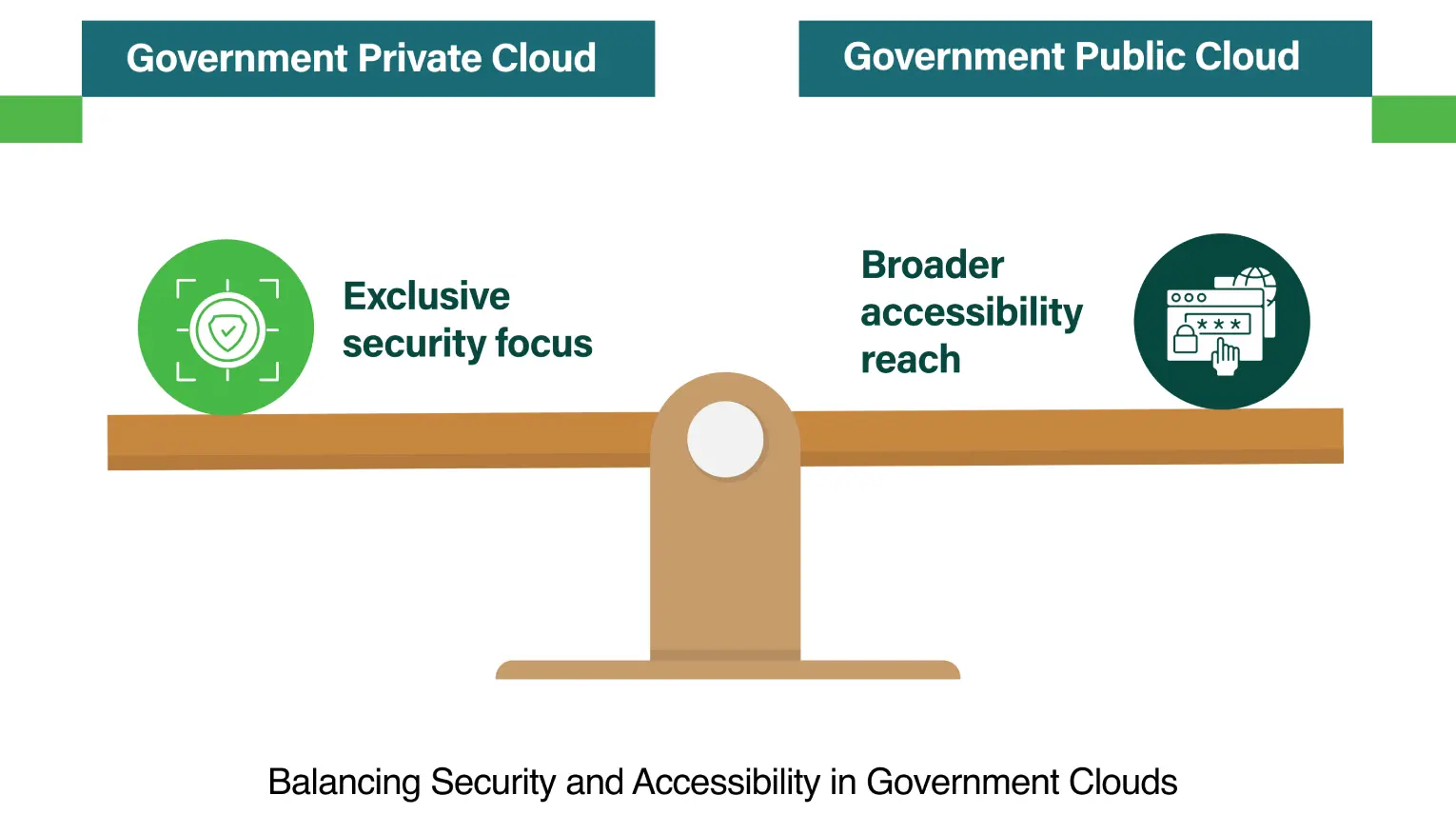
Public cloud platforms were designed for global scale, not national accountability. For consumer apps, that trade-off works. For government systems and citizen data, it introduces structural risks that policy, contracts, and configurations cannot fully neutralize.
1. Jurisdictional Vulnerability
Data sovereignty is not about where data sits. It is about which laws ultimately apply. Public clouds operate through globally distributed control planes, support teams, and legal entities. This creates exposure to foreign jurisdictions, including lawful access requests that sit outside Indian oversight.
Even with in-country regions, upstream control and escalation paths remain global. For regulated sectors like BFSI, healthcare, and critical infrastructure, this becomes a governance gap that cannot be audited away.
2. Security Gaps Threaten National Assets
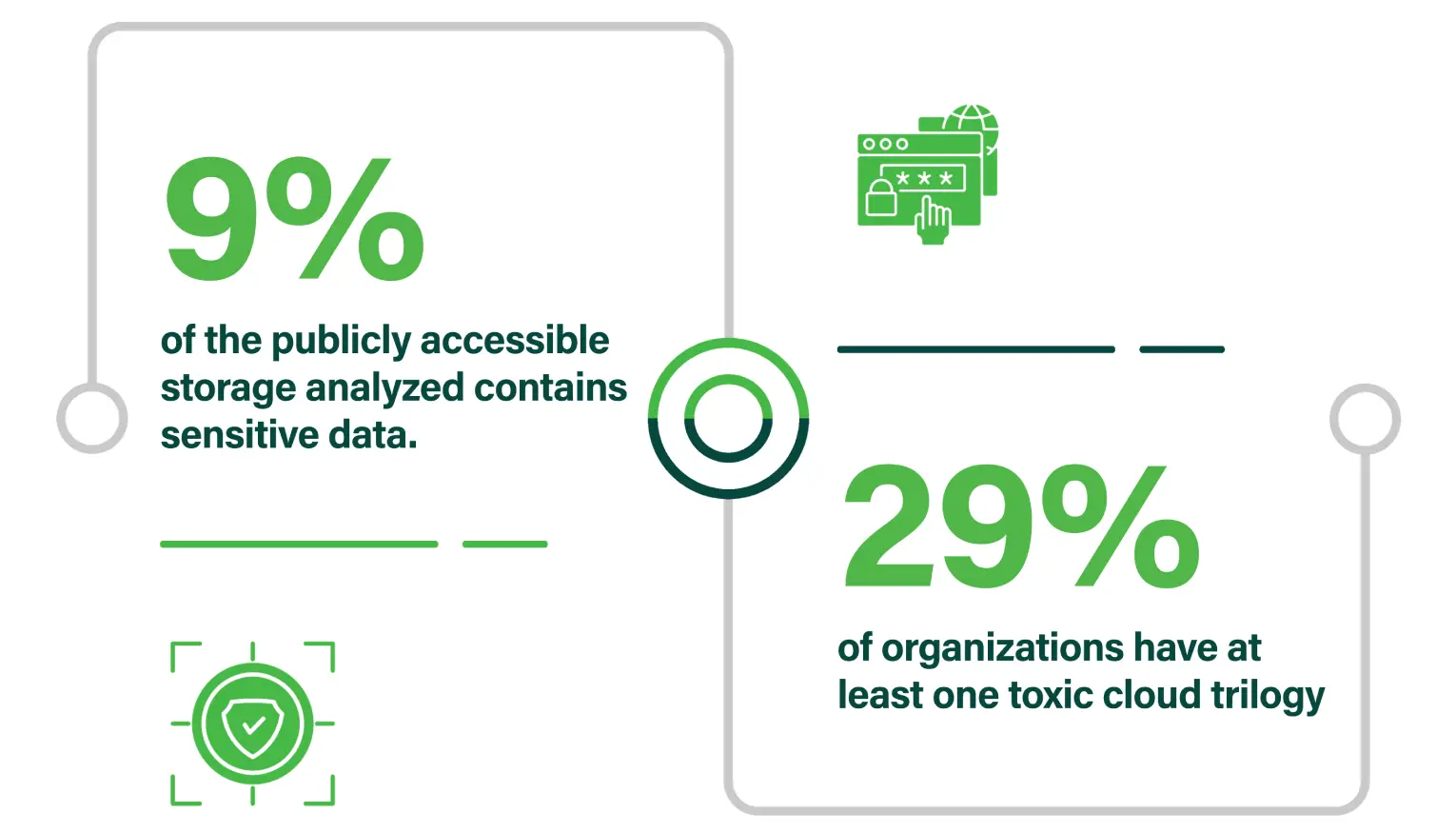
You would rarely see broken encryption as the reason for cloud security failures. These failures occur when there’s a misconfiguration at scale. The 2025 Cloud Security Risk Report shows that 9 percent of cloud storage resources contain restricted or confidential data, often exposed unintentionally.
Nearly one in ten publicly accessible storage locations holds sensitive information. As cyberattacks become more targeted and persistent, reactive security postures are insufficient for national systems.
3. Compliance Complexity
India’s regulatory stack is layered and unforgiving. The DPDP Act 2023 tightens sharply under the DPDP Rules 2025, effective November 13, 2025. Requirements include purpose-bound access, mandatory controls, strict residency, and near-instant breach reporting.
Public clouds struggle with residency visibility, shared responsibility ambiguity, and misconfiguration risk. Penalties can reach ₹150 crore for significant data fiduciaries by May 2027. RBI and SEBI add sector-specific cybersecurity and risk management obligations that further strain generic cloud models.
Long story short, public clouds create compliance challenges for government agencies handling citizen data.
India’s Digital Ambition Requires Digital Sovereignty
India’s digital trajectory is only going to grow – incrementally and exponentially. As platforms scale across governance, welfare, and national infrastructure, the underlying cloud model becomes a strategic choice.
The Strategic Imperative
Data sovereignty has shifted from a policy ideal to an operational necessity. AI workloads, concentrated cloud power, and geopolitical uncertainty are the key themes of this decade. And the nations that do not control their digital foundations risk ceding economic and regulatory agency.
India understands this instinctively. Its digital transformation has been built through deliberate state-led infrastructure, without any passive outsourcing. The National Informatics Centre today operates over 100 petabytes of storage and more than 5,000 servers supporting core e-governance platforms. This scale reflects intent.
Sovereign systems require predictable control over data, compute, and accountability, especially as public data becomes training fuel for next-generation AI systems.
Government Recognition of the Need
This directional change is already visible in policy and execution. The Ministry of Electronics and Information Technology formalized the National Government Community Cloud under the MeghRaj initiative, onboarding approved service providers aligned to government requirements.
Today, over 300 departments across the Centre and States are consuming cloud services through this framework. MeghRaj was designed to deliver standardized ICT services across government, but its relevance has grown beyond efficiency.
There is increasing recognition that a community cloud framework should be mandatory for citizen-centric platforms and critical sectors, where trust, auditability, and jurisdiction cannot be compromised.
Community Cloud: The Goldilocks Solution
As the debate moves beyond public versus private cloud, community cloud emerges as the pragmatic middle ground. It aligns with how governments actually operate, balancing sovereignty, scale, and fiscal discipline without forcing trade-offs that weaken control.
What Makes Community Cloud Different
Community cloud is purpose-built for organizations that share common security, compliance, and governance requirements.
For government, this means single-tenant, agency-specific environments rather than shared hyperscale infrastructure. Each entity operates in an isolated setup, with clearly defined ownership of data, access, and controls. At the same time, community cloud retains the elasticity and automation advantages typically associated with public cloud platforms.
This model is particularly well suited for government bodies, regulated financial institutions, and healthcare systems where compliance is not negotiable and auditability must be continuous rather than periodic.
Key Advantages for Government
Here are some of the key advantages:
- Security is inherent, not layered on.
- Dedicated resources operate within tightly controlled and continuously monitored environments designed for sensitive workloads.
- Compliance becomes enforceable by design, with alignment to global standards such as NIST and FISMA, alongside Indian regulatory mandates.
From a cost perspective, pay-per-consumption models consistently deliver 30 to 40 percent savings compared to traditional infrastructure. There are also documented cases for performance gains such as Gujarat achieving up to 40 percent faster service delivery. Resilience is proven as well.
During COVID-19, nearly 90 percent of Indian government ministries sustained operations through cloud-based disaster recovery frameworks, validating community cloud as infrastructure built for continuity.
How CtrlS Enables India’s Sovereign Cloud Vision
India’s sovereign cloud ambition needs infrastructure that is proven at national scale, engineered for zero tolerance, and operated with institutional discipline. This is where CtrlS plays a defining role.
1. Infrastructure Leadership
CtrlS operates Asia’s largest Rated-4 datacenter network, with zero downtime since inception. This is not a marketing claim but an operational record sustained over years of mission-critical workloads.
Its strategic footprint spans Mumbai, Chennai, Hyderabad, Noida, Bengaluru, and Kolkata, ensuring geographic resilience and proximity to government and enterprise hubs. Collectively, these Rated IV facilities deliver over 370 megawatts of power capacity.
A nine-zone security architecture governs every layer of access, movement, and control, creating an environment designed for national-scale data protection rather than generic enterprise hosting.
2. Government-Grade Security and Compliance
CtrlS is empanelled by MeitY, ensuring alignment with Indian data protection laws and sovereign requirements. Its security posture mirrors the standards demanded by India’s largest banks, consistently ranking among the top providers for managed security services. All data is hosted within India, inside government-certified facilities, eliminating ambiguity around residency, jurisdiction, and oversight.
3. Comprehensive Managed Services for Government Cloud
Beyond infrastructure, CtrlS delivers end-to-end managed services essential for government cloud operations. This includes 24 by 7 Remote Infrastructure Management with proactive monitoring across servers, networks, and databases. Security operations span firewall management across UTM, SD-WAN, and SASE environments, supported by Network Intrusion Prevention Systems and Zero Trust Network Architecture. Data protection is embedded through regular backups, disaster recovery, and business continuity planning. Compliance is continuously monitored, not retrofitted during audits.
4. Proven Track Record with Critical Infrastructure
CtrlS is trusted by leading financial institutions to secure digital transformation at scale. It supports high-volume transaction environments while maintaining strict data integrity. With over 300 certified engineers and a dedicated Center of Excellence, CtrlS brings execution maturity to India’s sovereign cloud vision.
The Path Forward: Building India’s Sovereign Future
India must refine its cloud adoption. The next phase of digital governance demands intent, discipline, and infrastructure choices aligned with national priorities.
What Government Agencies Need to Do
Government agencies must treat sovereign community cloud as the default for all citizen-centric services, not an exception. Data localization should be mandated for critical sectors where trust, continuity, and accountability are non-negotiable. Execution matters as much as policy, which is why working with MeitY-empanelled providers is essential to meet compliance, security, and audit requirements without fragmentation or risk.
How CtrlS Enables the Transition
CtrlS enables a controlled and low-risk transition from public cloud environments through lift-and-shift migration models that preserve continuity. Government projects are supported by personalized IT teams with 24 by 7 availability, ensuring operational stability from day one.
The infrastructure is built to scale for AI-driven workloads and future data growth, without redesign or compromise. Sustainability is embedded into this vision, with a clear commitment to Net Zero by 2030, supported by a 100 megawatt captive solar power plant.
Sovereignty, resilience, and responsibility move forward together.
Conclusion
In the AI era, India cannot afford to gamble with government and citizen data beyond its borders. As data becomes the backbone of intelligence, governance, and economic power, control over how it is stored, accessed, and used is non-negotiable.
A sovereign community cloud acts as a national shield, allowing India to define precisely how AI workloads operate and who governs access to sensitive data. This is not just a technical decision. It is a strategic one that determines ownership of India’s digital future.
With proven infrastructure, government-grade security, and a long-term commitment to nation-building, CtrlS stands ready to enable India’s digital sovereignty.

Vikram Kumar Venkata Mallavarapu, EVP - Public Sector & Enterprise, CtrlS Datacenters
With nearly three decades of experience building and scaling high-impact technology businesses across government and enterprise sectors, Vikram drives strategic partnerships, shaping public sector transformation, and accelerating India’s digital infrastructure growth. He has played a pivotal role in expanding CtrlS’ expansion and building government partnerships. He also manages strategic enterprise accounts, enabling CXOs to modernize mission-critical infrastructure and drive digital transformation.

 marketing@ctrls.in