
Introduction: The Dawn of a New Energy Paradigm
India’s digital infrastructure is scaling at an unprecedented pace, and hyperscale datacentres now sit at the core of that expansion. The country’s installed datacentre capacity reached 1,263 MW as of April 2025.
This growth brings an unmistakable challenge. Hyperscale facilities need uninterrupted power at volumes comparable to urban consumption. Staying sustainable while maintaining this scale of reliability requires a solution beyond conventional grid supply.
For the first time, India has both the renewable capacity and the technology maturity to support large-scale solar integration with advanced Battery Energy Storage Systems, commonly referred to as BESS. Together, they are shaping a new energy model for hyperscale efficiency.
The Hyperscale Power Problem
India’s datacentre sector is projected to reach 4,500 MW capacity by 2030. This rapid rise creates intense pressure on the power ecosystem.
A key study notes that Indian solar capacity exceeded 116.24 GW as of August 2025 (Press Information Bureau, Government of India). While this strengthens national renewable availability, hyperscale consumption is continuous and inflexible.
Challenges include:
- Grid stress, particularly in clusters such as Mumbai, Chennai and Hyderabad.
- Dependency on diesel generators, which face regulatory and environmental pushback.
- Sustainability commitments from major cloud operators that now mandate near-zero emissions pathways.
Hyperscale operators must find resilient, long-duration and environmentally aligned solutions. Solar alone is insufficient. Diesel cannot remain the default backup. Batteries are becoming essential.
Solar’s Promise and Its Challenge
India crossed 100 GW of installed solar capacity in early 2025. These numbers underscore India’s potential to use solar as a primary input for hyperscale energy.
Yet the challenge persists: solar is variable. India’s average solar capacity-factor for utility-scale systems hovers around 20 percent due to climatic and operational factors. This means a 100 MW solar plant does not produce 100 MW continuously. Solar output drops at night, during monsoon periods, and during high-particulate days. For hyperscales requiring stable power, this variability is a fundamental hurdle.
This is where storage becomes indispensable.
Battery Energy Storage Systems: The Game Changer
Battery Energy Storage Systems, or BESS, store energy from solar or grid sources and release it when needed. They are engineered for multi-hour dispatch, unlike UPS systems which provide only short-duration bridging.
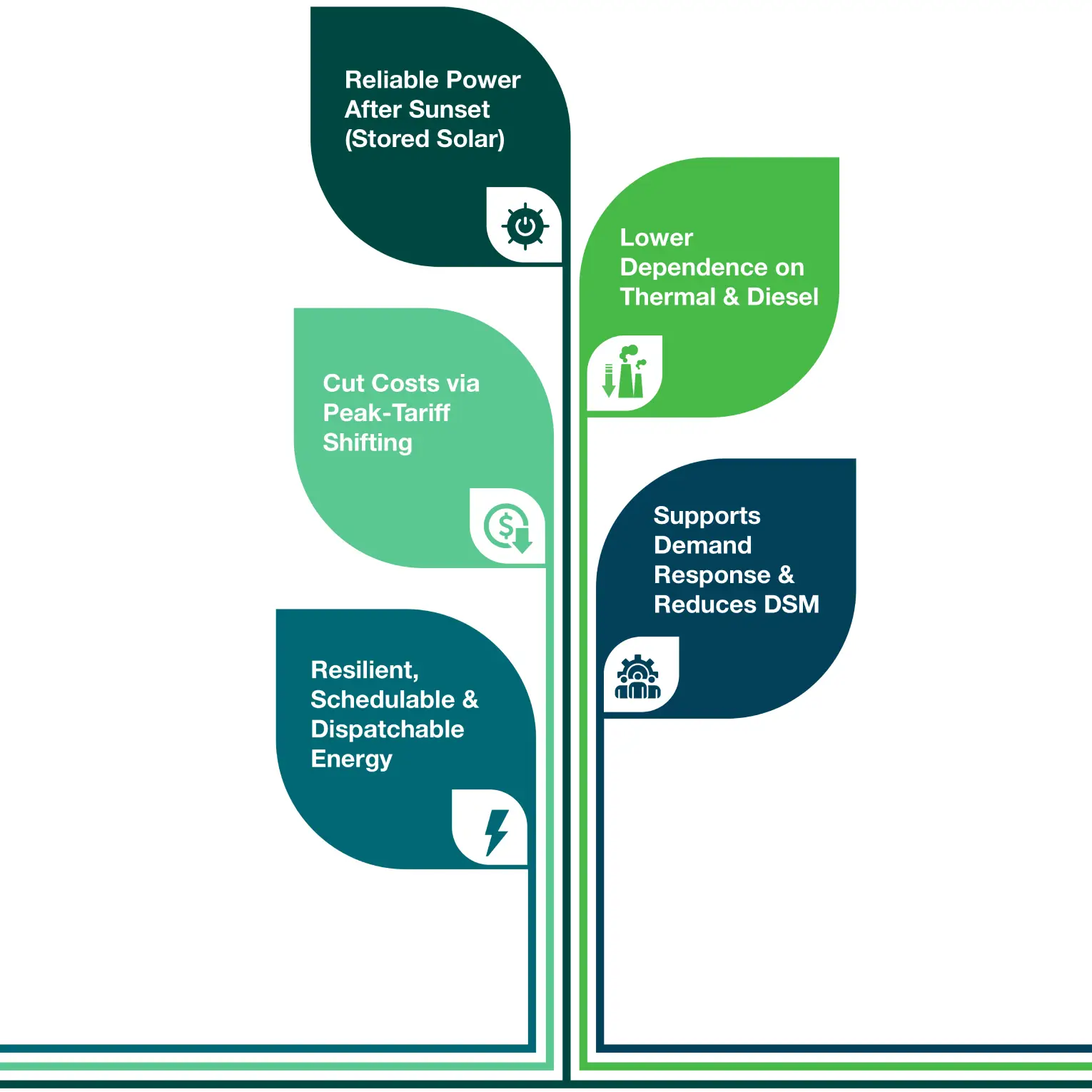
Five high-impact advantages of BESS:
Delivers power reliably after sunset by storing excess daytime solar – ideal for India’s peak-demand window.
Reduces reliance on thermal generation and diesel, supporting cleaner operations and meeting tightening regulatory norms.
Lowers operating cost by enabling tariff arbitrage – store during low-cost hours, use during peak-tariff periods.
Improves grid-side flexibility by supporting demand-response and lowering imbalance/DSM penalties.
Enhances resilience during grid instability or outages through schedulable, dispatchable energy.
For datacentres where uptime and sustainability must co-exist, BESS transitions from optional infrastructure to strategic infrastructure.
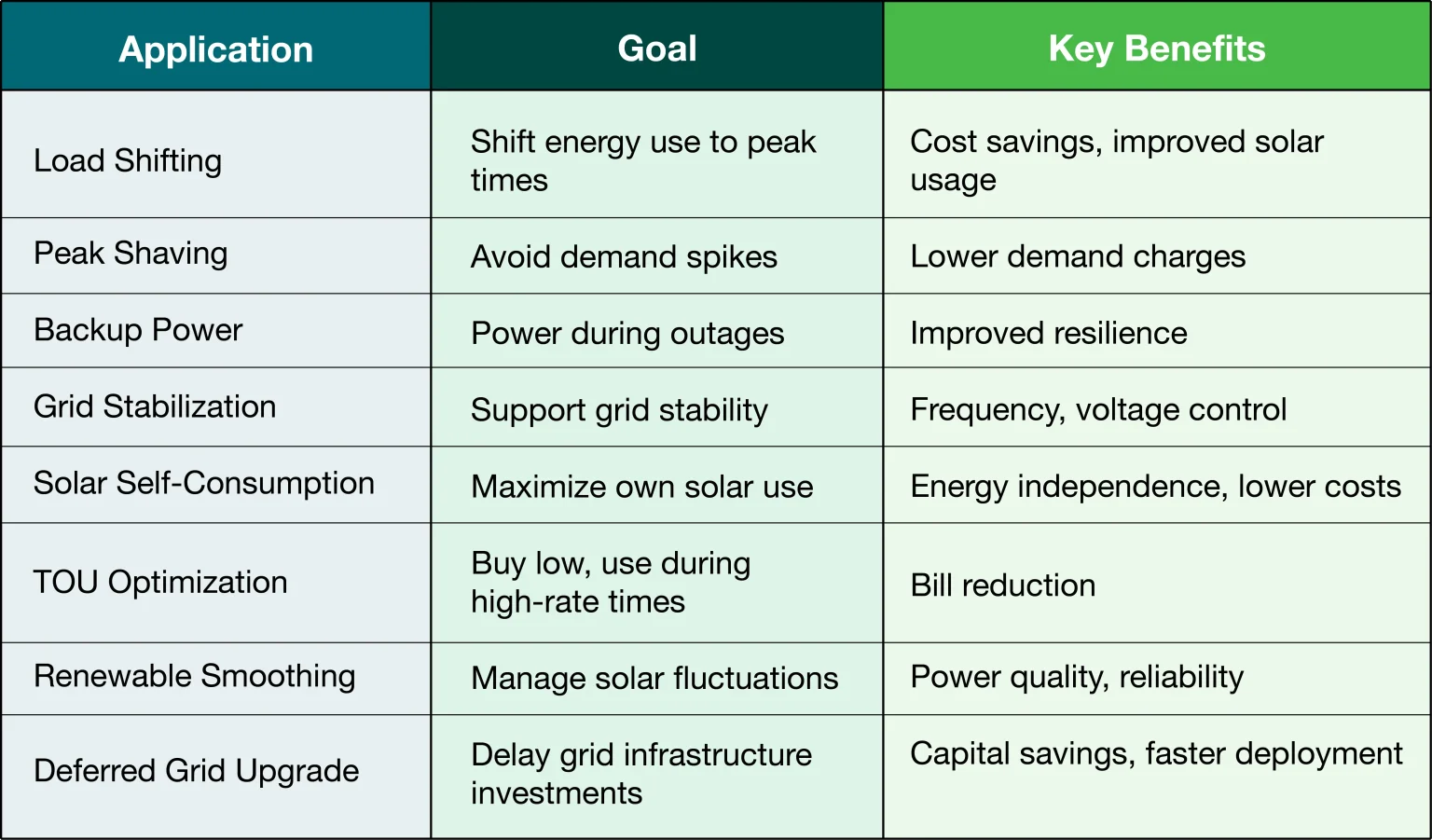
Solar and BESS: A Symbiotic Solution for Hyperscales
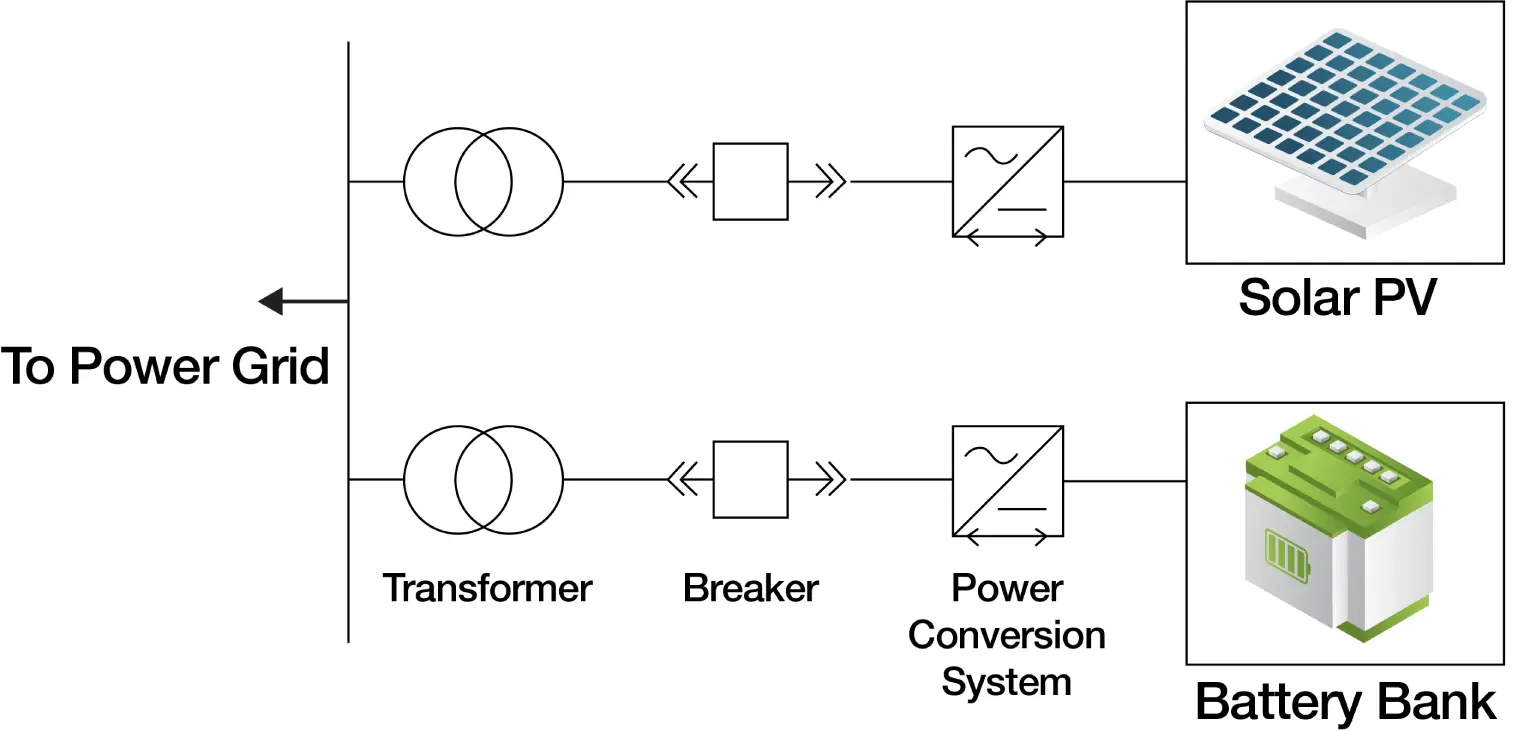
Combining solar with BESS creates a closed-loop renewable ecosystem that supports steady hyperscale operations.
This integration enables
- Full night-time operation using stored solar energy.
- Revenue or savings through demand-response and grid-service participation.
- Cleaner, faster backup power compared to diesel.
- Improved performance metrics such as lower PUE values and reduced Scope 2 emissions.
Solar ensures clean generation. BESS ensures continuous availability.
When in collaboration, they form the architecture of a modern hyperscale energy model.
Technology Trends Driving Adoption
Several India-specific factors are accelerating adoption of solar + storage architectures.
- Lithium-ion batteries have become the dominant storage technology due to higher density, faster discharge response and improved lifecycle economics.
- Solar project costs continue to decline sharply, improving feasibility for large-scale deployments.
- Policy momentum is strong. India reported 116.24 GW of solar installations as of August 2025, signaling long-term support for renewable integration.
- More projects are being designed as hybrid solar plus storage models from inception.
- Energy markets are opening incremental opportunities for storage-enabled grid services.
The intersection of technology maturity and policy direction makes solar with BESS a natural choice for new hyperscale developments.
Beyond Energy: Strategic Advantages for Hyperscales
Beyond operational efficiency, the solar plus BESS architecture offers broader strategic advantages.
- It aligns with ESG and carbon-neutrality goals.
- It reduces community opposition tied to diesel emissions and noise.
- It enables hyperscale facilities to participate not just as energy consumers but energy contributors.
- Cost Efficiency: Charging BESS with solar energy is more cost-effective than using grid power, primarily due to lower generation costs.
- It shields operators from tariff fluctuations and grid-reliability uncertainties.
In a competitive cloud economy, these non-technical advantages often prove decisive.
Global Examples and Early Movers
India’s data-centre landscape is already shifting toward renewable energy as a core pillar. The country’s capacity of 1,263 MW in April 2025 is on track to more than triple to 4,500 MW by 2030.
At the same time, India added 22.5 GW utility-scale solar in nine months of 2025, one of the fastest growth cycles in the world
These two macro-curves – hyperscale growth and solar expansion – are converging. This creates a historic opportunity for hyperscales to adopt solar plus storage solutions at scale. CtrlS is uniquely positioned in this environment due to its integrated approach to data-centre design, energy architecture and sustainability engineering.
The Road Ahead: From Optional to Inevitable
Indian hyperscale energy demand is rising sharply. Regulatory pressure on diesel is increasing. Solar capacity is expanding rapidly. Battery storage is becoming more affordable and more capable.
The question is no longer whether solar and BESS can support hyperscale operations.
The question is when operators will adopt it as the baseline architecture.
For CtrlS clients, the way forward is clear. Every future hyperscale design or expansion should incorporate solar together with BESS not as an add-on but as a core component of the power strategy.
Technical Challenges:
- Battery Degradation: Faster degradation in high-temperature zones needs attention in the market to look for high and reliable battery applications in terms of lower degradation.
- Round Trip Efficiency Loss: 8–15% energy loss during charge/discharge still needs to be enhanced and ensured the system to Battery cell designs to be optimised for utility scale applications.
- High CAPEX: Still the market is seeing high cost of installation due to costs involved in Cell manufacturing and imports especially for the Indian market, where it needs some thorough evaluation on the cost market.
- Safety: Manufacturers to develop clear SOPs for the Thermal runaway risk, Fire suppression requirements and Stringent ventilation & temperature control which makes the BESS market so reliable and technically sound.
Conclusion: Storing the Sun to Power the Future
Solar alone cannot power hyperscale data centres around the clock. BESS alone cannot supply green energy. But together, they create a continuous, clean and resilient power ecosystem.
This combination offers operators a path to sustainability, reliability and cost-efficiency without compromise.
CtrlS stands ready to partner on this transition through deep expertise in data-centre design, renewable integration and hybrid energy architecture. The hyperscale world is evolving. Those who act now will lead.

Rishik Teepireddy, Vice President - Renewable Energy, CtrlS Datacenters
With over eight years of rich experience, Rishik Teepireddy leads the Renewable Energy Division at CtrlS. As part of his role, Rishik spearheads the company’s transition toward sustainable, low-carbon operations. He drives strategy and execution for large-scale solar projects, renewable energy procurement, and green power integration across CtrlS’s hyperscale datacenters. Under his leadership, CtrlS is advancing towards 100% renewable energy adoption by 2030 and net-zero emissions by 2040.

 marketing@ctrls.in