
Disaster recovery infrastructure gets planned, replication gets configured and recovery procedures get documented. The organization then assumes that recovery readiness has been achieved. In practice, the heavy lifting starts after the infrastructure is available. But why do companies need a robust disaster recovery strategy? Because the economic burden of disasters is intensifying. According to the GAR 2025 report, direct costs of disasters averaged $70–80 billion a year between 1970 and 2000, between 2001 and 2020 these annual costs grew significantly to $180–200 billion. Total disaster costs are now exceeding $2.3 trillion annually. It also estimates that every $1 invested in disaster risk reduction delivers an average return of $15 through averted future disaster recovery costs.
A robust recovery strategy begins with the business and works its way down to infrastructure. It identifies the assets that matter, the consequences of their failure, the dependencies between them and the recovery capability each one requires. That creates a basis for deciding where to invest, what architecture to use and how much operational effort the organization can sustain.
Start with what needs to survive
The first step is to map the assets that support business continuity.
A complete site outage may require one recovery approach, while the failure of a single critical database may require another. Treating every workload in the same way can result in unnecessary cost for some systems and inadequate protection for others.
Architecture always follows the recovery objective
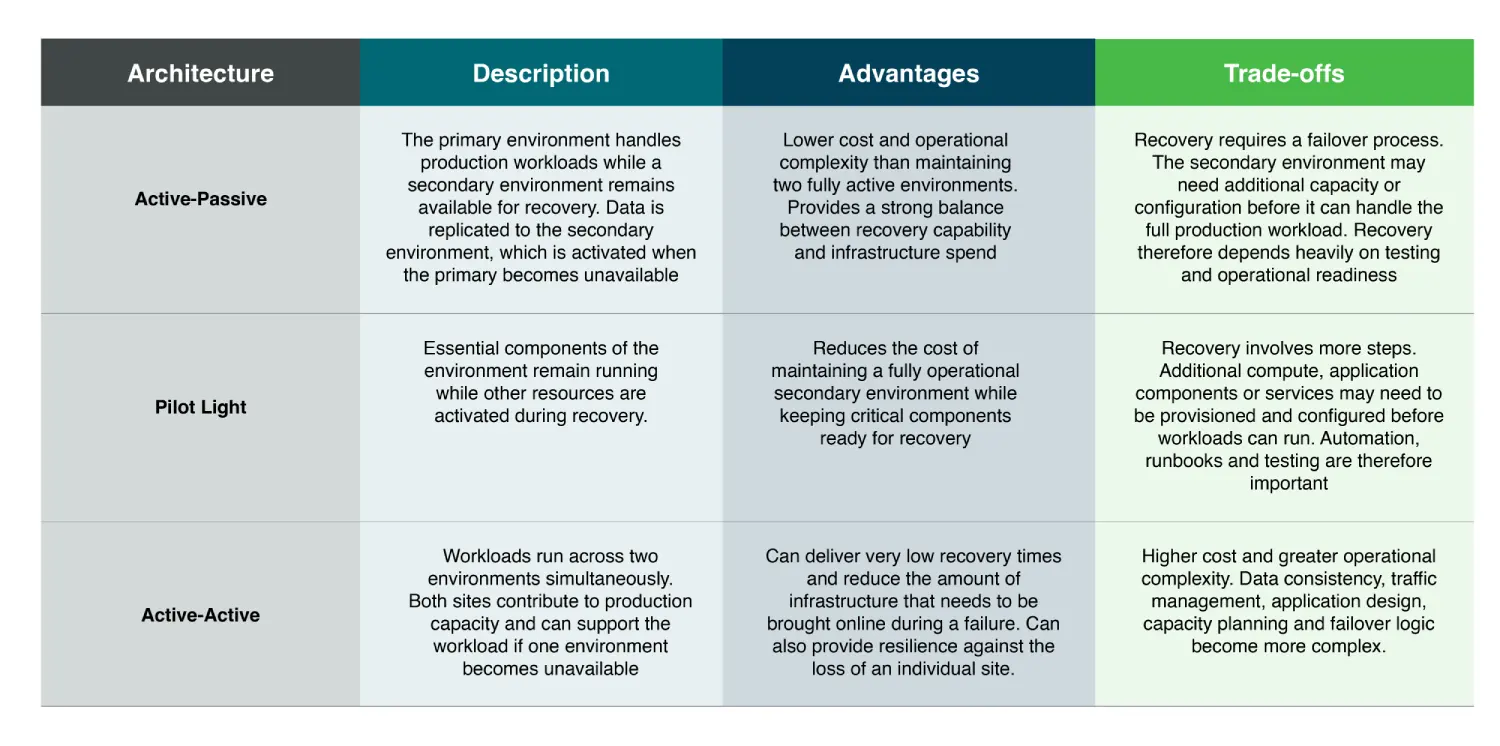
Architecture patterns become useful when they are treated as ways of meeting specific recovery objectives.
Other recovery models
Organizations can also combine these patterns across workloads. A single enterprise may use active-active for a small set of critical services, active-passive for important applications and pilot-light or cold recovery for workloads with longer recovery windows.
That is where recovery tiers become useful.
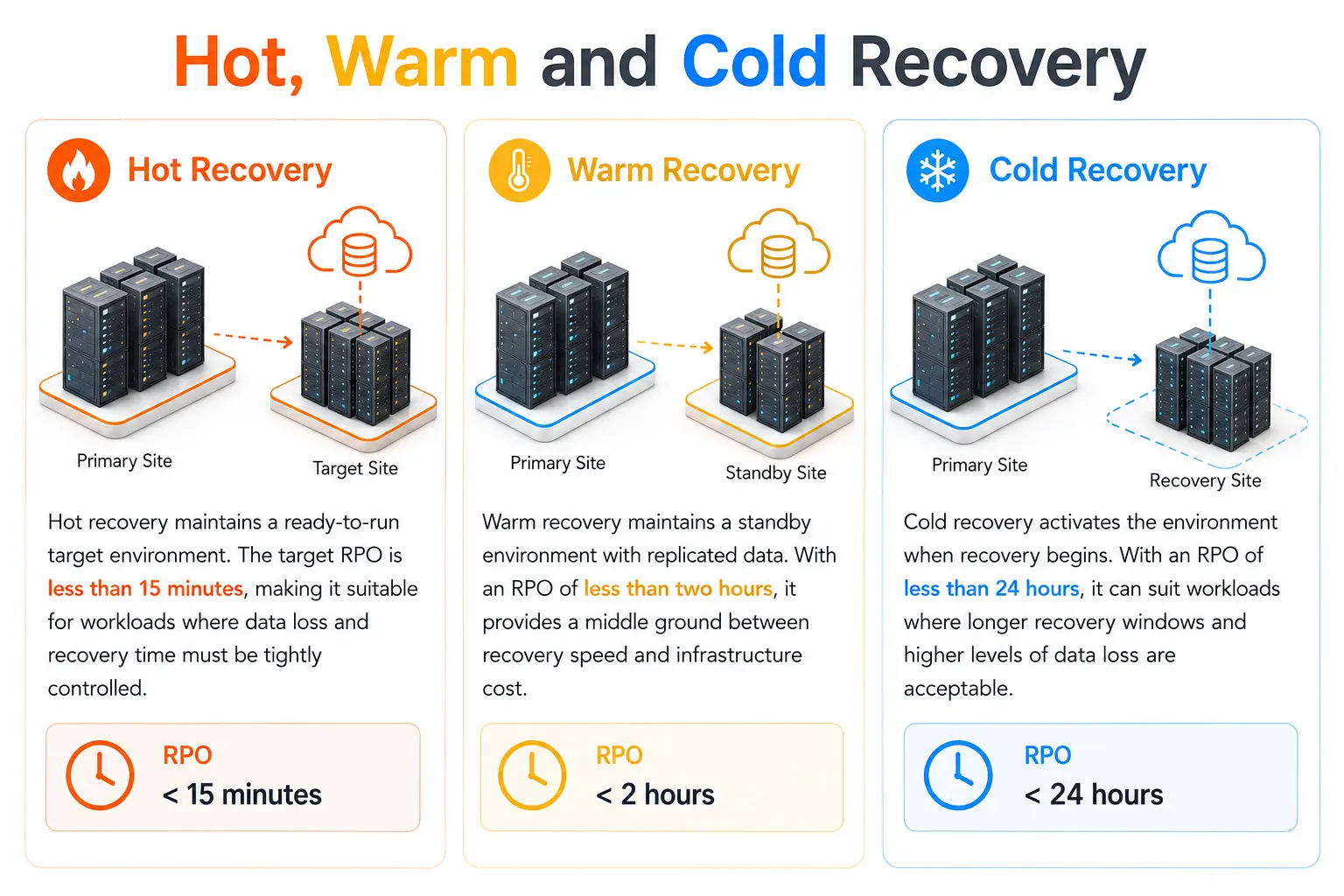
These tiers give organizations a way to align investment with business requirements. The most expensive recovery architecture does not automatically make sense for every application.
Site DR vs. Application DR: Choosing the Scope of Recovery
Architecture decisions also need to account for the scope of recovery. Site DR and Application DR address different failure scenarios and can be used together as part of the same recovery strategy.
Site DR is designed for events where the operating environment itself becomes unavailable. A datacenter outage, regional disaster or major infrastructure failure can affect multiple applications, systems and services at the same time. Site-level recovery provides a coordinated way to restore the broader IT environment and its dependencies.
Application DR focuses on recovering a specific business application and the infrastructure, databases and services it depends on. This is useful when the wider environment remains available but an individual application or its data becomes unavailable. It can also allow organizations to assign tighter recovery objectives to critical applications without applying the same level of recovery investment across the entire site.
The choice between the two should therefore follow the failure scope and business impact. A critical application may require application-level recovery even when the wider site remains operational, while a site outage may require coordinated recovery across multiple workloads. In many environments, the two approaches work together, with application-level recovery providing targeted protection and site-level recovery addressing broader infrastructure failures.
Recovery readiness lives in the operating process
GAR 2025 Report also highlights that while only around 19% of disasters are classified as multi-hazard, these events account for almost 59% of total economic losses—underscoring why recovery strategies must account for cascading failures rather than isolated incidents.
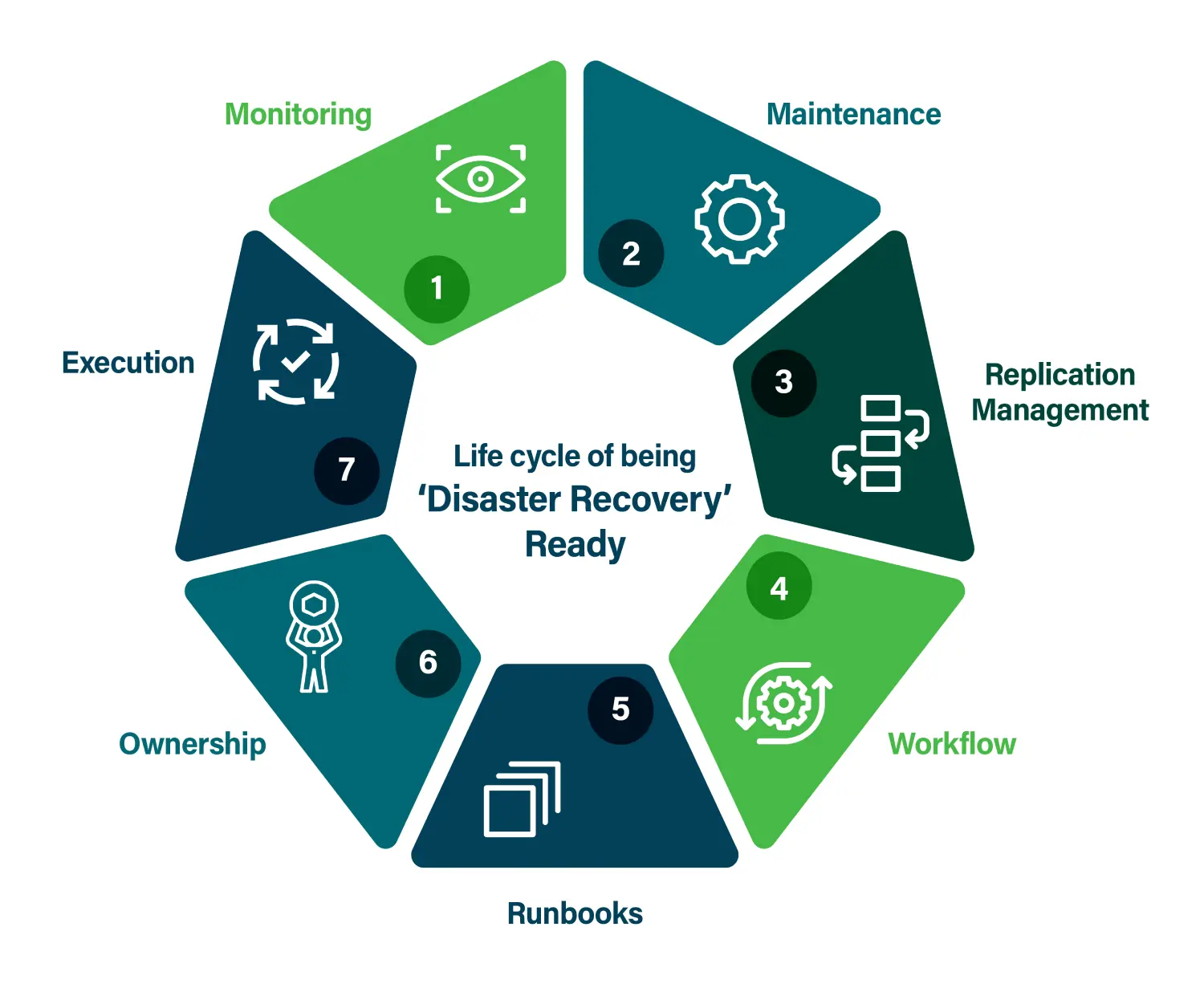
A recovery environment can remain healthy while the recovery capability around it quietly deteriorates. This makes recovery readiness a vital part of having a functioning disaster recovery.
Monitoring keeps recovery visible
Round the clock (24/7) disaster recovery monitoring should track the health of replication, storage, networks and other components. An alert that identifies a replication problem days before an incident gives the operations team an opportunity to correct it. The same problem discovered during a live outage becomes a recovery risk.
Maintenance keeps the recovery environment aligned
Recovery environments need to evolve with production environments. A recovery environment must be tested periodically to have the latest production architecture. This ensures the recovery environment is always up to date.
Replication management protects the recovery point
Replication needs active management. Teams need visibility into replication status, failures, lag and the recovery point available for each protected workload.
RPO is therefore an operating measure, not simply a number written into a recovery plan.
Workflows and runbooks turn plans into action
A recovery plan needs defined sequences of actions. Runbooks capture decisions like Who declares the incident? Who approves the failover? etc., before an incident forces people to make them under pressure.
Ownership closes the accountability gap
Every part of the recovery process needs an owner. The organizations need clarity on who can make the decision to fail over and who owns the final validation for infrastructure, applications, databases, networks, security and business teams. That is what turns a collection of procedures into an operating model.
Testing should change the recovery strategy
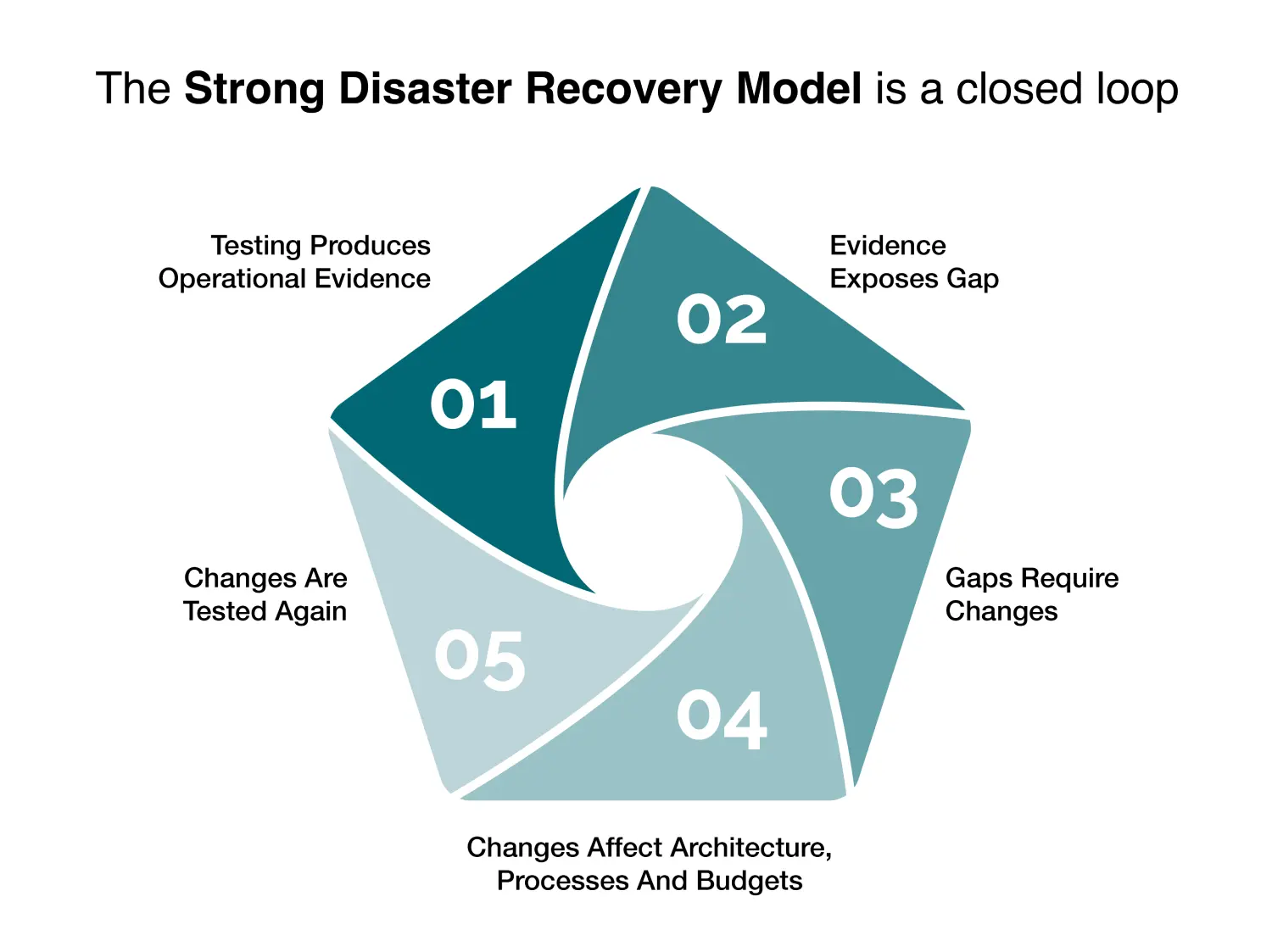
Testing exposes issues that planning can miss. Regular testing should therefore be part of the operating cycle. Testing can include different levels of validation, from component checks and application recovery tests to planned failover drills. The scope and frequency should reflect workload criticality, recovery objectives and regulatory requirements.
However, a drill that ends with a report and no change to the operating model has limited value.
Remote Infrastructure Management can close the operating gap
Running a mature recovery capability requires people, skills, monitoring, drills, documentation and continuous maintenance. For most organizations, maintaining all of these capabilities internally can create a cost that is difficult to justify.
Remote Infrastructure Management can provide a way to manage this operational responsibility. An organization can retain ownership of its infrastructure and business decisions while an external team manages monitoring, replication, drills, documentation and recovery execution under defined service levels.
This model becomes especially useful when recovery requirements are high but maintaining a dedicated internal team for every recovery function is difficult.
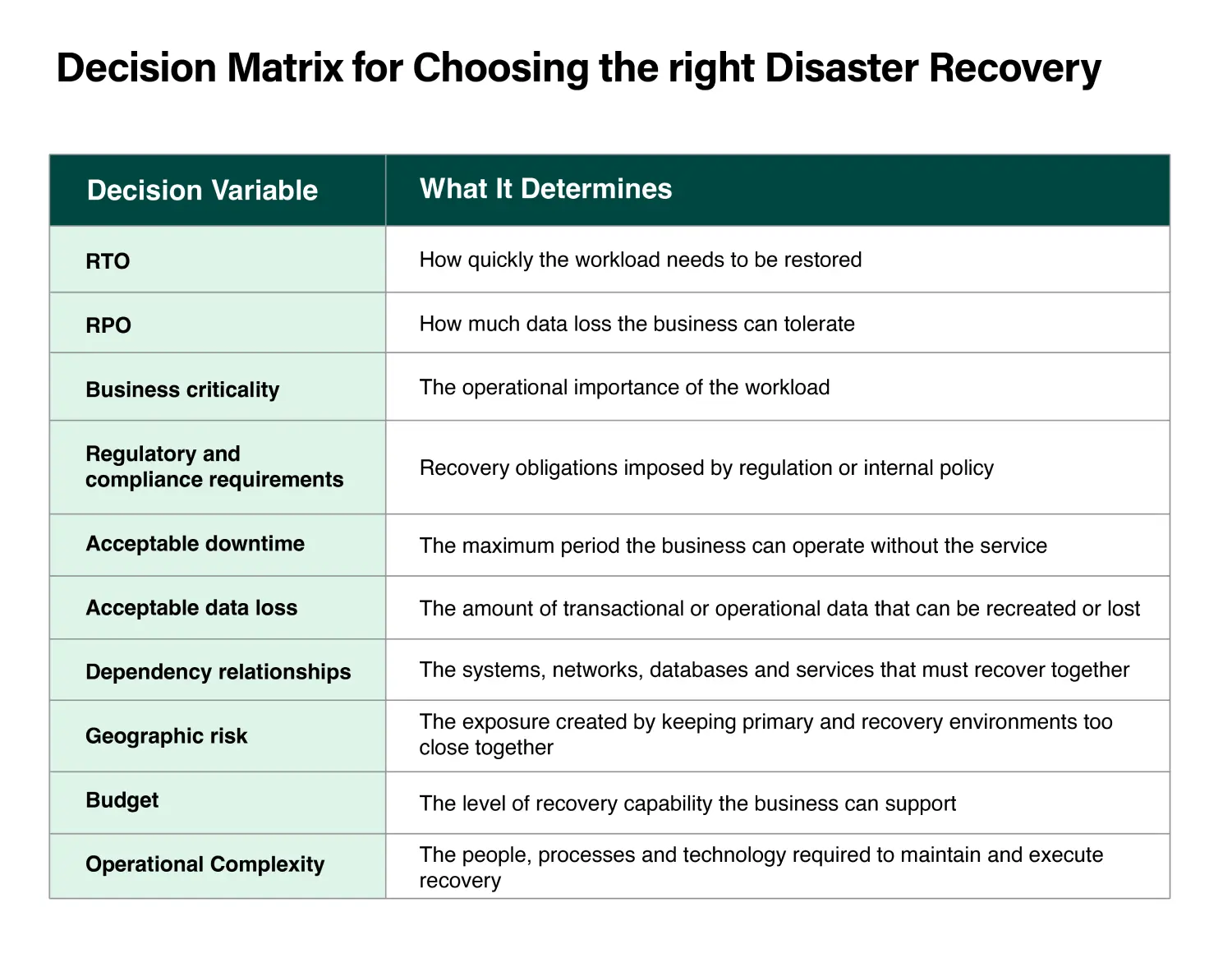
These variables turn recovery planning into a decision-making exercise.
DRaaS changes the economics of standby infrastructure
Traditional recovery models can require organizations to maintain substantial infrastructure even though it spends most of its time waiting for an incident. DRaaS can provide recovery capacity as a managed service. The environment can operate at a lower steady-state capacity, scale for scheduled drills and expand to full capacity during an actual failover.
The model can therefore align infrastructure consumption more closely with recovery needs.
For an in-depth dive into DRaaS and its benefits, read our article on DRaaS vs Traditional Backup.
Turning recovery into an operating service
With Disaster Recovery Managed Operations, organizations can retain ownership of their recovery infrastructure while CtrlS manages the operational layer around it. This includes 24×7 DR monitoring, managed DR drills, audit evidence packs, incident management and failover execution.
The operating model matters because the team managing the recovery environment is also involved in the drills. The same operational knowledge can therefore carry through from testing to an actual failover.
For organizations looking to reduce the infrastructure burden, disaster recovery on Demand through DRaaS provides another model. CtrlS also supports different recovery tiers, application-level and site-level recovery, and replication approaches across on-premise, colocation and cloud environments. This allows the recovery design to be mapped to the workload rather than forcing every application into the same architecture.

Manzar Saiyed, Vice President - Service Delivery, CtrlS Datacenters
With over 15 years of rich experience in project and program management, Manzar has been instrumental in planning and executing mid to large size complex initiatives across different technologies and geographies. At CtrlS, he is responsible for solutioning and bidding for large system integration projects across emerging markets.

 marketing@ctrls.in